Choosing between vending, a micro-market, and a pantry comes down to three questions: who pays, how many people are on-site daily, and how much space and fresh food you want. Vending keeps cost off the employer; a micro-market is a self-service store with fresh food; a pantry is employer-funded and works at almost any size. Get those three answers and the right choice gets clear.
Most employers come to us already sensing they want something better than a lone machine in the corner. What they are not always sure about is which of the three shapes that "something" should take. The good news is that the decision is not really complicated once you see what actually separates them.
So let us put all three side by side and walk through how to pick.
Vending vs micro-market vs pantry: what's the difference?
The three look like variations on the same theme, but they answer different questions. The cleanest way to tell them apart is to ask: when someone grabs a snack, who paid, and how much is on-site to choose from?
- Vending is the compact, familiar option. A modern machine holds a curated set of snacks and drinks, employees buy what they want with tap-to-pay or mobile wallet, and it fits almost anywhere with very little footprint.
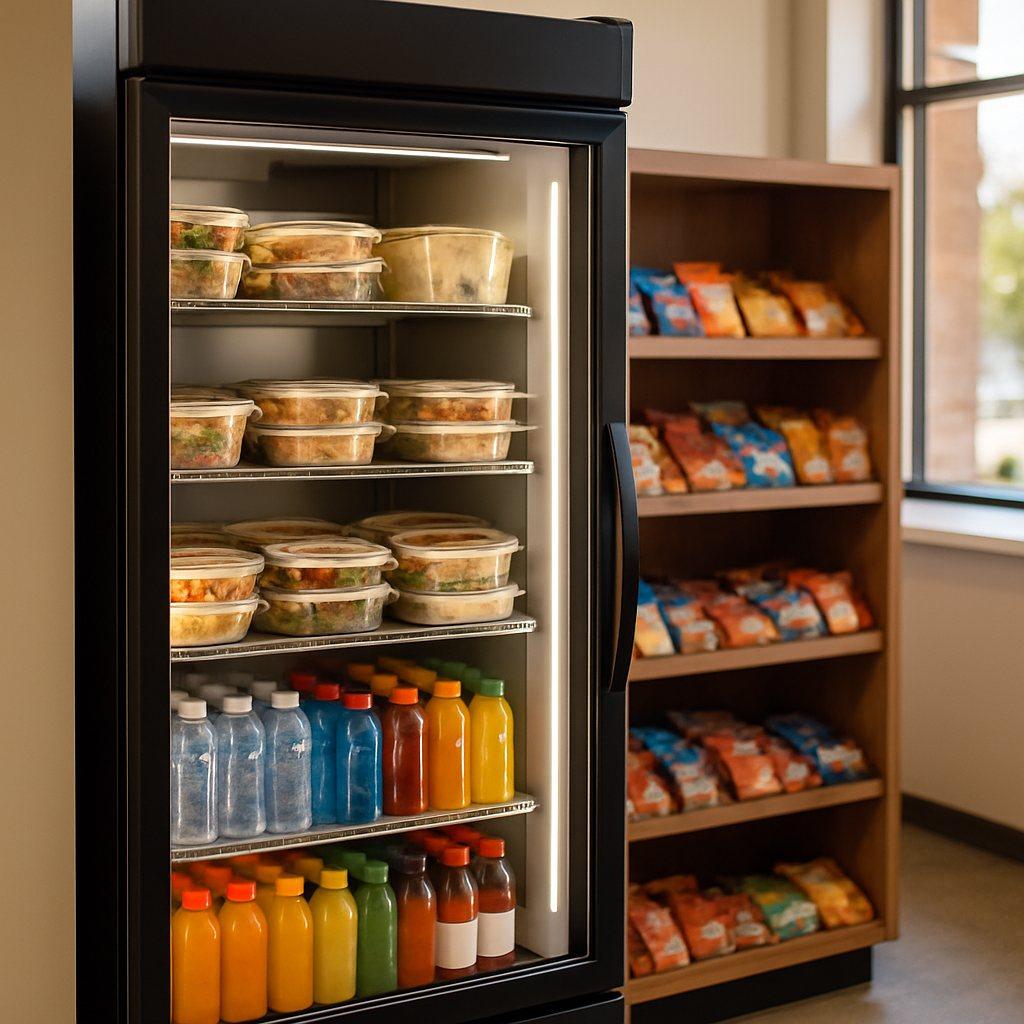
- A micro-market is a small self-service store. Open shelves and refrigerated cases hold a wide selection, including fresh food and meals, and employees check themselves out at a kiosk. It needs more room and more daily traffic, and it rewards both.
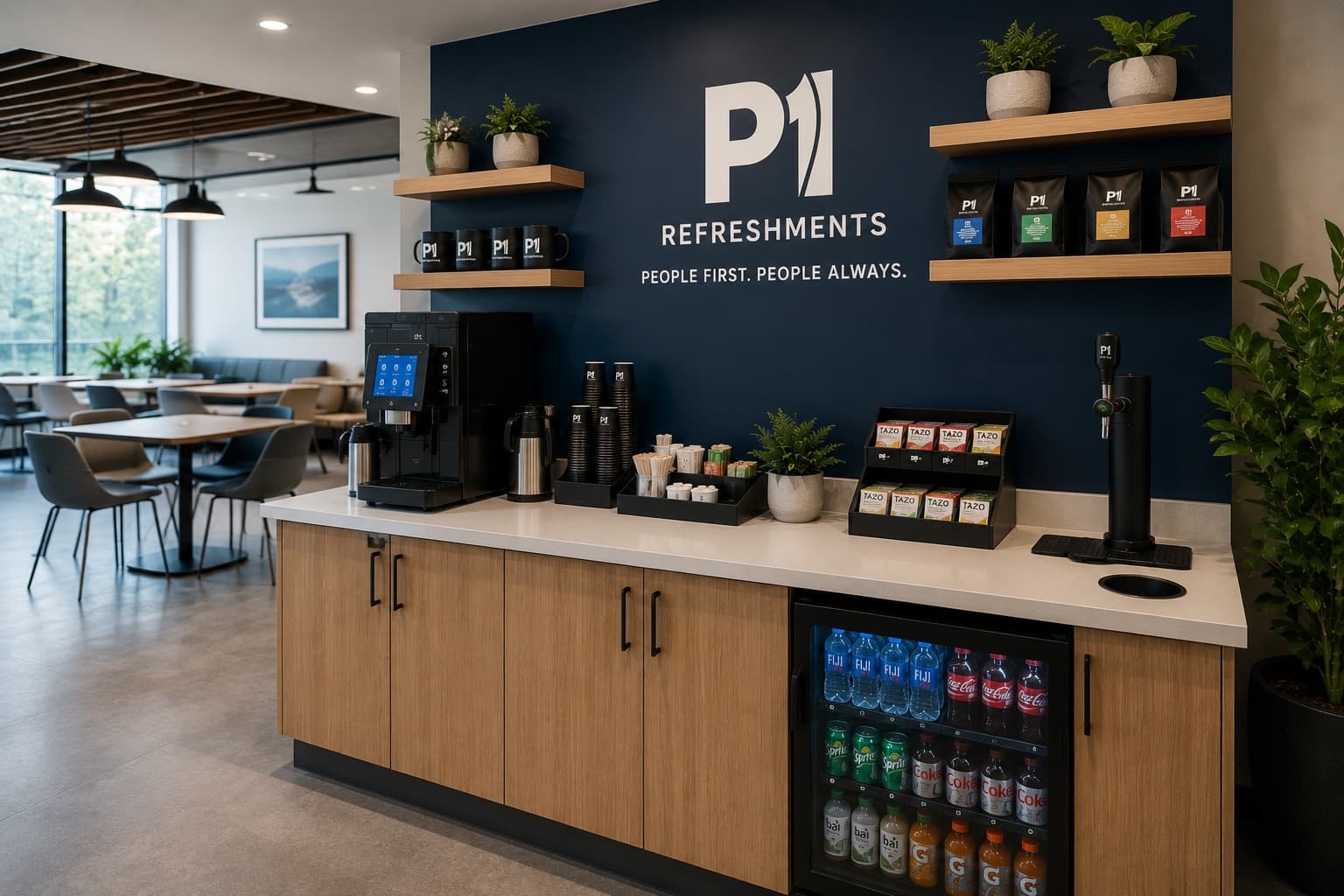
- A pantry is the employer-funded one. The snacks, drinks, and essentials are complimentary to your team because your organization sponsors them. There is no kiosk and no transaction; people simply take what they need.
Same destination, a breakroom people genuinely like, reached three different ways. One keeps cost off the employer, one maximizes variety and fresh food, and one turns the breakroom into a sponsored benefit.
The three side by side
The food can overlap across all three. What truly differs is the funding model, the footprint, and how much fresh selection sits on-site. Here is the head-to-head on the factors that actually drive the decision.
| Vending | Micro-Market | Pantry Program | |
|---|---|---|---|
| Who pays | Employees buy per item | Employees buy at self-checkout | Employer sponsors it — free to staff |
| Best for headcount / traffic | Smaller or lower-traffic sites | Higher-traffic sites with steady daily users | Almost any size — no real headcount floor |
| Space needed | Minimal — a machine footprint | A dedicated area for shelves and fridges | A counter, shelf, or small nook |
| Fresh food | Limited; packaged snacks and drinks | Yes — fresh meals, produce, grab-and-go | Whatever you choose to stock and fund |
| Selection | Curated and compact | Broad, including refrigerated variety | Curated staples you sponsor |
| Employer cost | No equipment cost; employees fund product | Service and setup; employees fund product | Direct — scales with headcount and usage |
| What it says | "Something good, right here." | "Everything you want, on-site." | "This one's on us." |
Read down that table and the trade-offs sharpen. Vending keeps it simple and keeps cost off you. A micro-market trades more space and traffic for far more variety and real fresh food. A pantry concentrates the cost on the employer and returns a complimentary, generous perk. Your three answers, who pays, how many people, how much space and fresh food, point to one of them, or to a blend.
When each one is the right call
There is no universal winner. There is just the one that fits your situation, and a few honest patterns make the call easier.
When vending fits best
Vending is the right starting point when the footprint is tight, the daily traffic is modest, or you simply want a real upgrade from nothing without taking on product cost. It installs almost anywhere, employees fund what they buy, and there is no equipment cost to you. For a smaller Waco office or a site you are not ready to build a store into, it is often exactly enough. If you are weighing it on a budget, whether a vending machine is really free covers the no-equipment-cost model in plain terms.
When a micro-market fits best
A micro-market earns its place when you have the traffic and the room, and you want variety and fresh food on-site so people stop leaving the building for lunch. Industry guidance generally points markets toward higher-traffic locations with steady daily users, because the broader footprint and fresh selection pay off when enough people use them. If your team has outgrown a couple of machines, that is usually the signal. Our piece on what a micro-market is for Waco employers and the practical space a micro-market needs cover the fit before you commit.
When a pantry fits best
A pantry fits when the gesture is the goal, when you want the breakroom to feel like a benefit and you are willing to fund it. It carries no real headcount floor, so it works for small teams a market would not, and it sends a daily, complimentary "we've got you." In a market like Waco, where the typical household earns about $51,468 a year, a free breakroom is something people feel in a paycheck-stretching way. The mechanics and honest cost frame are in our guide to what an office pantry program costs a Waco employer, and pantry versus micro-market covers the who-pays choice directly.
Can you do more than one?
Often the best answer is "a blend." A common Waco setup pairs a paid micro-market or vending for the full selection with a complimentary pantry layer on top, free coffee, water, and a few sponsored staples, so the team gets everyday choice and a daily perk in the same room. You are not locked into a single category.
That is the lens behind our managed vending, managed micro-market, and managed pantry services, and behind micro-markets for Waco workplaces: we will look at your team, your space, and your budget and tell you honestly which one, or which mix, best serves your people.
Because the right breakroom is not the most elaborate one, or the one with the most on the shelf. It is the one that fits your team and tells them, in a way they feel every day, that they matter here.
People First. People Always.