The real difference between a pantry program and a micro-market is who pays at the point of use. A pantry is employer-funded — the snacks and drinks are complimentary to your team. A micro-market is a self-service store inside your workplace where employees buy what they want at a self-checkout kiosk. A pantry is a sponsored benefit; a micro-market is an on-site convenience store. For a Waco office, the right pick comes down to your headcount, your budget, and what you want the breakroom to say.
These two get confused constantly, and it is easy to see why — both fill a breakroom with good food, both feel like an upgrade from a lone vending machine, and both get described as "stocking the office." But they are different tools answering different questions, and the difference is not really about the food. It is about the funding model.
Get that distinction right and the decision gets a lot clearer. So let us lay the two side by side: what each one is, who pays, and how to tell which fits your Waco office.
Pantry vs. micro-market: what's the actual difference?
Strip away the surface and it comes down to one question: when an employee grabs a snack, who paid for it?
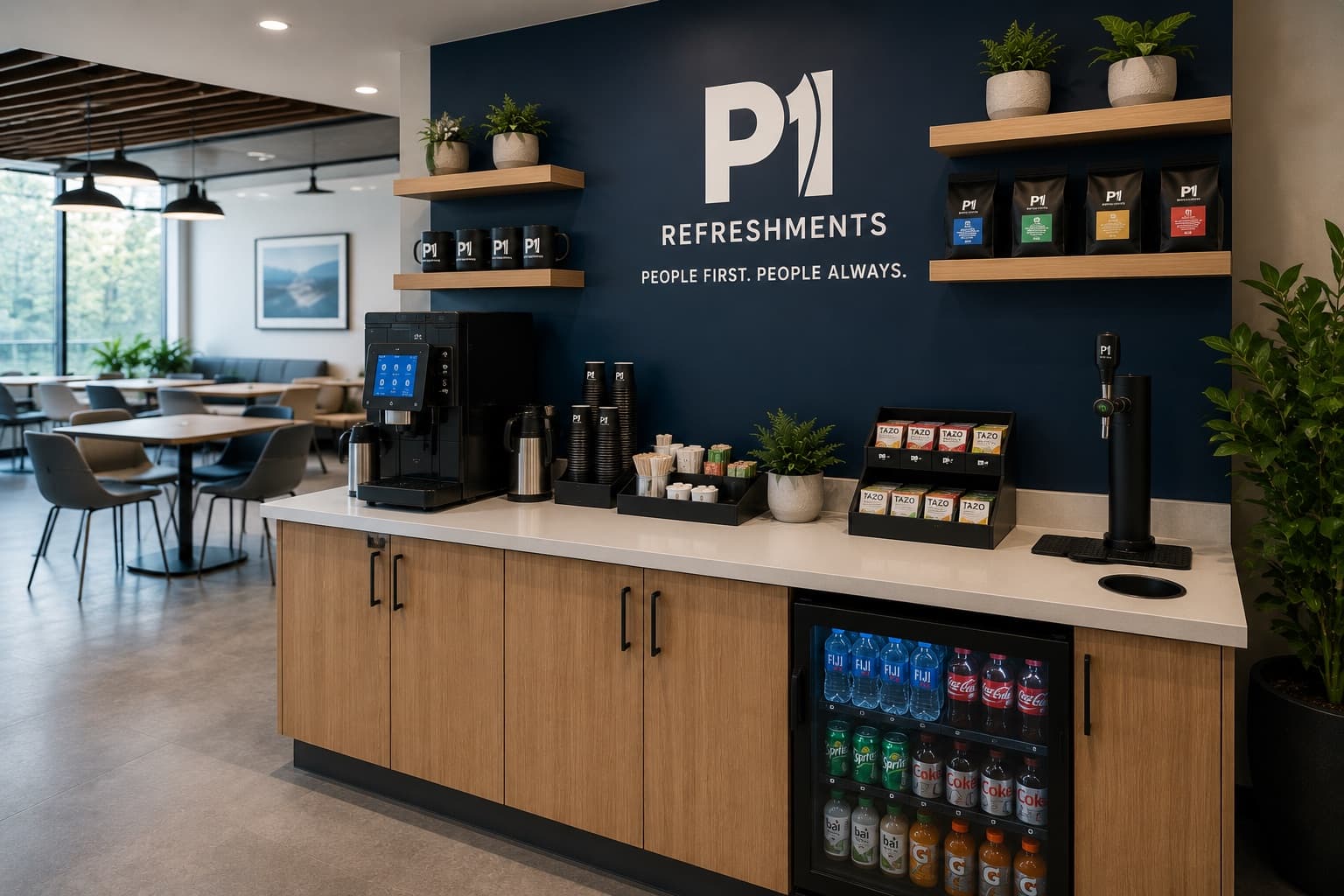
With a pantry program, the company did. The snacks, drinks, and breakroom essentials are complimentary — your organization sponsors them, and your team simply takes what they need. No card, no kiosk, no transaction.
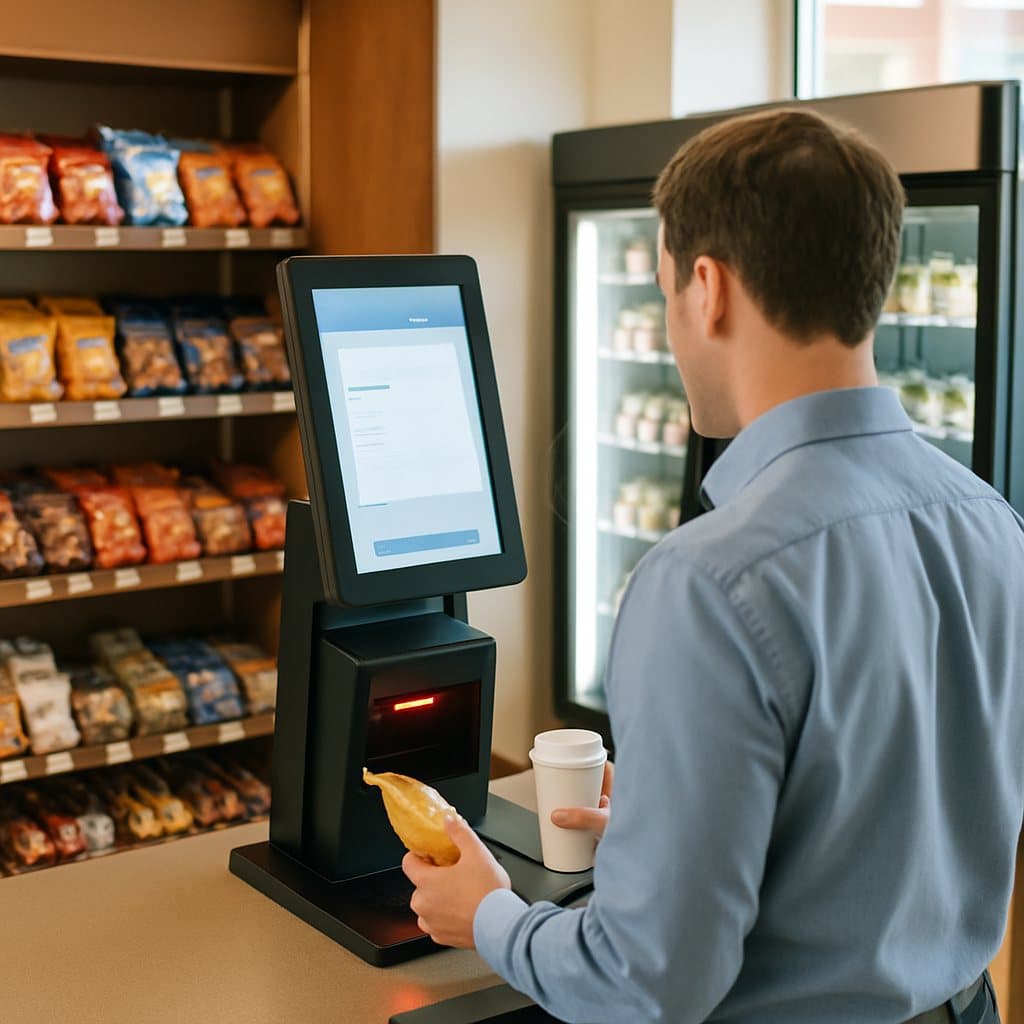
With a micro-market, the employee does. It is a small, self-service convenience store inside your workplace: open shelves and refrigerated cases of food and drinks, including fresh meals, with a self-checkout kiosk where people pay for what they grab.
Same goal — a breakroom people actually like — reached two different ways. One says "this is on us." The other says "everything you want, right here, no trip off-site."
Who pays — and what that signals
This is the heart of it, so it is worth being plain. A pantry is a direct employer cost: you sponsor the product, and that spend scales with your headcount, product mix, and restock frequency. A micro-market shifts the product cost to the people buying — employees pay per item at the kiosk, the same as they would at a corner store, just without leaving the building.
That changes what each one signals, too. A complimentary pantry reads as a benefit, a small daily "we've got you." A micro-market reads as convenience and choice — a genuine perk, but a different kind. Neither is better; they say different things, and the right one depends on what you want your breakroom to say.
How they compare, head to head
The food can overlap, but the model, the footprint, and the feel differ in ways that matter for the decision.
| Pantry Program | Micro-Market | |
|---|---|---|
| Who pays | Employer sponsors it — free to staff | Employees pay at self-checkout |
| The feel | A complimentary benefit | An on-site convenience store |
| Best for | Teams of nearly any size | Larger teams with the volume for a store |
| Selection | Curated staples you choose to sponsor | Broad selection, including fresh meals |
| Checkout | None — just take what you need | Self-checkout kiosk, mobile wallet |
| Employer cost | Direct — scales with headcount and usage | Equipment and service; product cost is the employees' |
| What it says | "This is on us." | "Everything you want, right here." |
Read down that table and the trade comes into focus. A pantry concentrates the cost on the employer and returns a generous, complimentary perk. A micro-market spreads the product cost to employees and returns variety, fresh food, and a real store on-site. Your budget and your intent point to one or the other.
Which one is right for your Waco office?
There is no universal answer, but a few honest patterns make the call easier.
When a pantry program makes more sense
A pantry tends to fit when the gesture is the goal — when you want the breakroom to feel like a benefit and you are willing to fund it. It also suits smaller teams well, because it works at almost any headcount; it does not need the daily foot traffic a store relies on to be worth running.
In a market like Waco, that gesture carries weight. The typical local household earns about $51,468 a year, and small, tangible perks land hard against budgets like that — a complimentary breakroom is something people feel every single day. If you want the mechanics and the honest cost frame, our guide to what an office pantry program costs a Waco employer walks through it.
When a micro-market makes more sense
A micro-market tends to fit when scale and selection are the goal — a larger team whose volume supports a full self-checkout store, and people who would rather grab a fresh sandwich on-site than drive off for lunch. The bigger footprint and broader range earn their place when there are enough people using them.
If your team has simply outgrown a couple of vending machines, that is often the real signal. Our piece on what a micro-market is for Waco employers covers the format in plain terms, and how much space a micro-market needs covers the room and layout side before you commit.
Can you do both?
Often the best answer is "both." A common Waco setup pairs a micro-market for the full paid selection with a complimentary pantry layer on top — coffee, water, and a few staples the company sponsors, with everything else available to buy at the kiosk. Your team gets everyday choice and a sponsored perk in the same room, and we tailor that blend to your goals and budget rather than forcing an either-or.
The honest way to decide
When employers weigh a pantry against a micro-market, the deciding question is rarely the food — it is what you want the breakroom to do and what you want to spend. A pantry funds a generous, complimentary gesture; a micro-market funds a convenient, variety-rich store; a blend does some of each.
That is the lens behind our managed micro-market service and our managed pantry program, and behind micro-markets for Waco workplaces: we will look at your team, your space, and your budget and tell you honestly which one — or which mix — best serves your people.
Because the right breakroom is not the most elaborate one. It is the one that fits your team and tells them, in a way they feel daily, that they matter here.
People First. People Always.