There is no single headcount that flips the switch. A growing Waco warehouse moves from vending to a micro-market when the crew is large enough that more variety and fresh food are worth the floor space, especially when a whole shift breaks at once and the nearest real lunch is a drive away.
If you run a growing facility in Waco, you have probably already got vending. A couple of machines in the breakroom, doing their job. And lately you have started to wonder whether your team has outgrown them.
It is a fair question, and a common one. Waco is full of large-headcount workplaces — Amazon's fulfillment center off Exchange Parkway runs over a thousand jobs, the Mars Wrigley plant runs continuously, and the distribution centers along the I-35 corridor keep getting bigger. When a crew that size shares two machines, the cracks start to show. So here is how to think about it, without a sales pitch.
The question every growing facility hits
Vending works beautifully up to a point. The point is usually volume.
When your headcount climbs and everyone breaks around the same time, a few things happen. The machines empty faster. A line forms. The curated row of snacks starts feeling thin to people eating from it every day. None of that means vending failed — it means your team grew past what two machines can comfortably serve.
Vending vs. micro-market for a warehouse: side by side
The general difference between vending and micro-markets is one thing. The difference for a warehouse decision is another — it comes down to crew size, fresh food, and how a whole shift breaks at once.
| For a warehouse | Keep vending | Add a micro-market |
|---|---|---|
| Crew size (rule of thumb) | Up to ~75-100 on-site | Roughly 100+, or multi-shift |
| Product range | ~40-60 items per machine | 150+ items, including fresh food |
| Throughput | Fine for a few at a time | Self-checkout clears a full shift |
| Fresh meals | Limited to packaged | Sandwiches, salads, full meals |
| Space needed | About 15-20 sq ft per machine | Roughly 100-250+ sq ft |
| Best when | Space or headcount is tight | Nearby food is far and the crew is big |
Read down the right column. If most of those describe your floor — a big crew, breaking together, with the nearest real lunch a drive away — a micro-market probably earns its footprint. If the left column fits better, vending is still the smart call, and we will tell you so.
The headcount where a micro-market starts to pay off
People always want a number, and we understand why. But there is no honest single threshold.
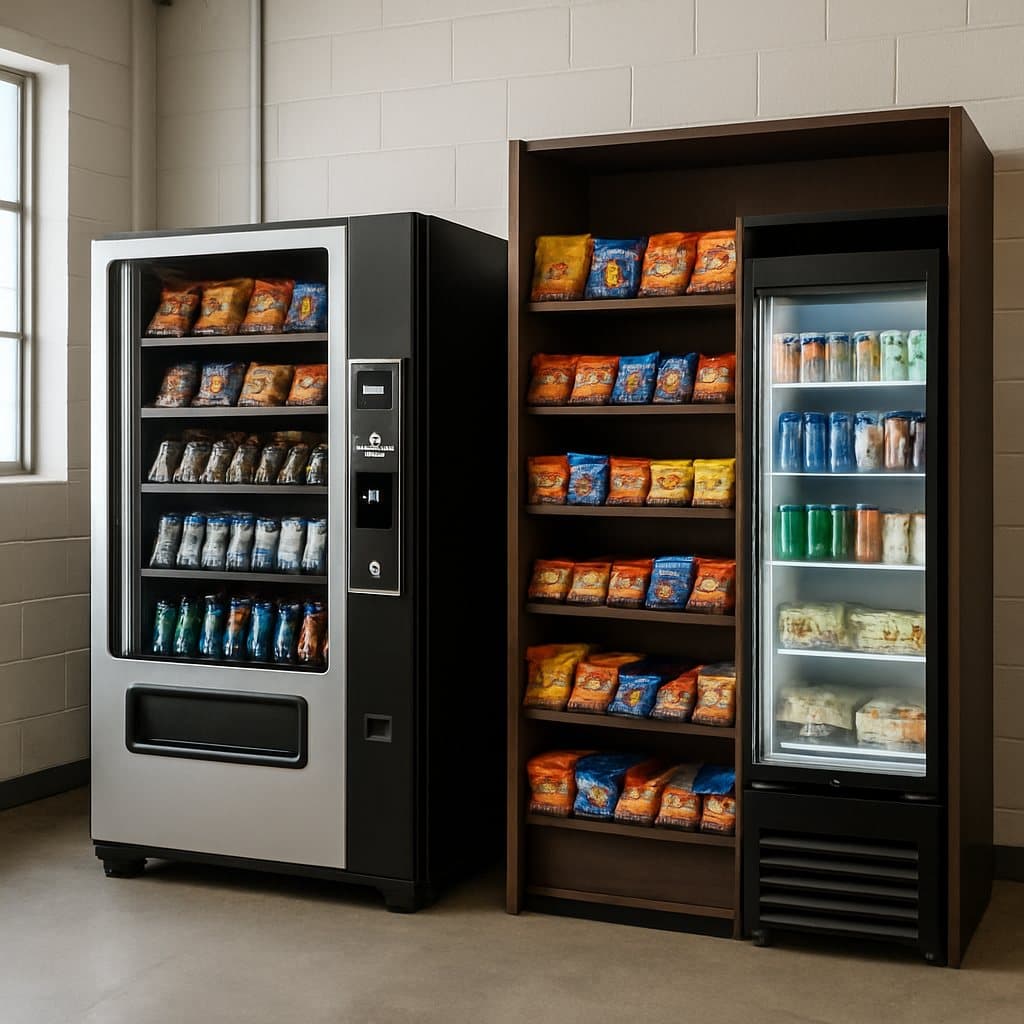
As a rough industry guide, most operators keep vending the smarter call up to about 75 to 100 people on a floor, and a micro-market starts to earn its footprint somewhere past that — roughly 100-plus, or sooner when a site runs multiple shifts. A single machine typically holds 40 to 60 items in about 15 to 20 square feet; a micro-market opens that up to 150-plus items, including fresh meals, across roughly 100 to 250 square feet. Those are starting points, not rules.
What actually matters is the combination: headcount, how many break at once, the space you have, and how far your crew has to go for a decent meal. A 60-person shift in a building with no food for miles may want a market sooner than a 120-person crew next door to a dozen lunch spots. We look at your actual situation and give you a real answer rather than a rule of thumb that does not fit your floor.
Is a micro-market more expensive for the employer than vending?
Not in the way most people assume. Both vending and micro-markets are built around employee purchases rather than a bill to the company, and in both cases we handle the inventory, the restocking, and the maintenance. The models differ in some details, and we walk you through exactly how each one works for your facility before you decide anything — no surprises. What stays constant either way is that your crew never runs it; your people just see a clean, ready breakroom.
What you keep from vending, and what changes
Upgrading does not mean throwing away what works. The reliable parts of vending carry right over.
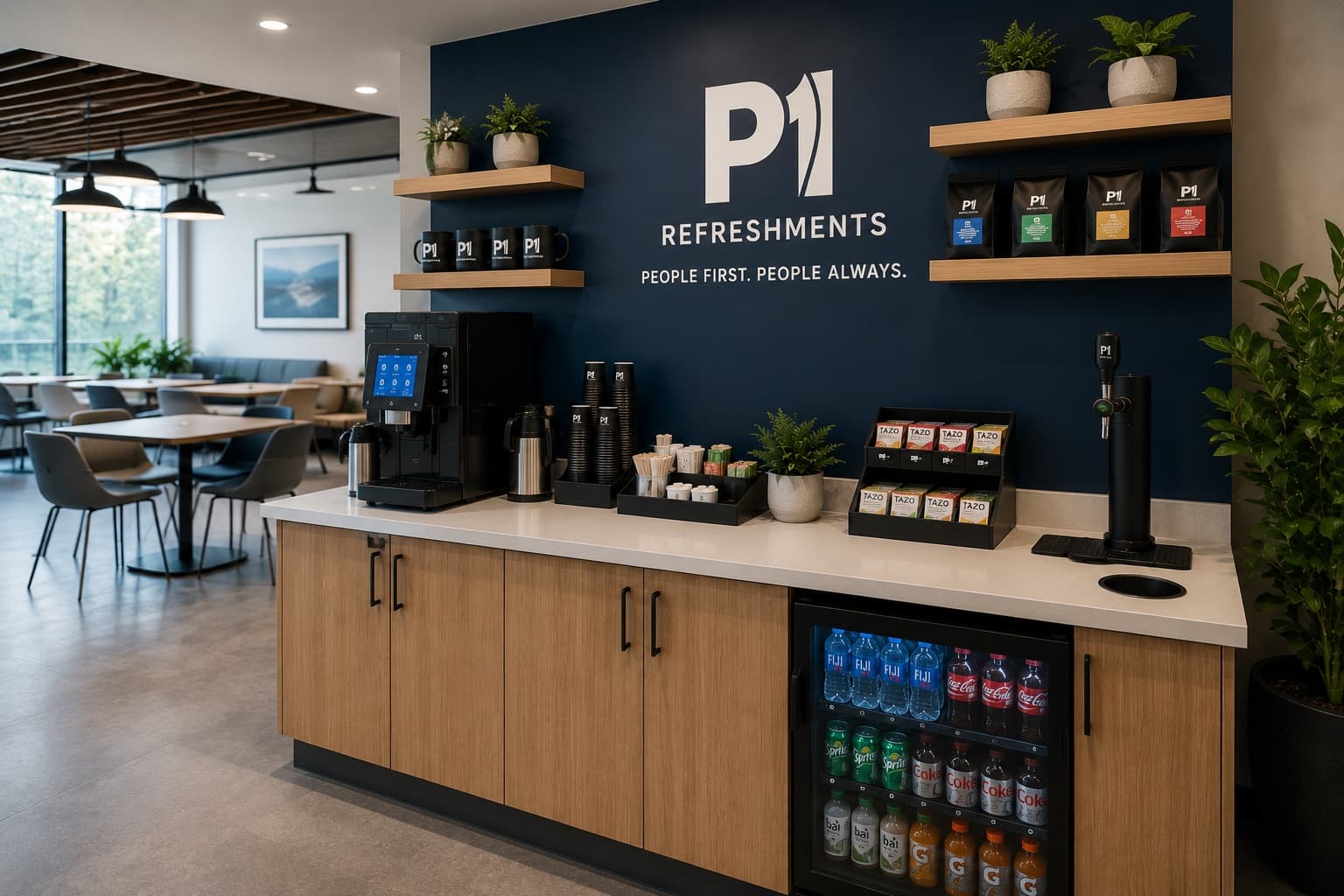
You keep cashless, contactless payment. You keep the around-the-clock availability your shifts need. You keep a team that monitors stock and restocks before things run out. What changes is the breadth — open shelves, coolers of fresh meals, self-checkout instead of one coin slot, and a breakroom that feels like a place to be rather than a wall of machines. The standard behind both is the same one in our managed micro-market service, our vending service for Waco workplaces, and our micro-market service for Waco facilities: stocked before it runs out, backed by a local team you can actually reach.
How to pilot without ripping out your machines
The best part: you do not have to bet the whole breakroom to find out.
Many facilities run a mix on purpose — keep vending in satellite spots and add a micro-market as the main hub, then watch how the crew uses it. It is a low-risk way to see whether the variety and fresh food land before you commit further. If you want the full background first, our employer's guide to micro-markets covers how they work, and vending for Waco's round-the-clock plants digs into shift-floor vending specifically.
Because every choice here is really about the people on that floor. The goal is not the fanciest breakroom — it is the one that serves your crew best for who they are and how they work.
People First. People Always.