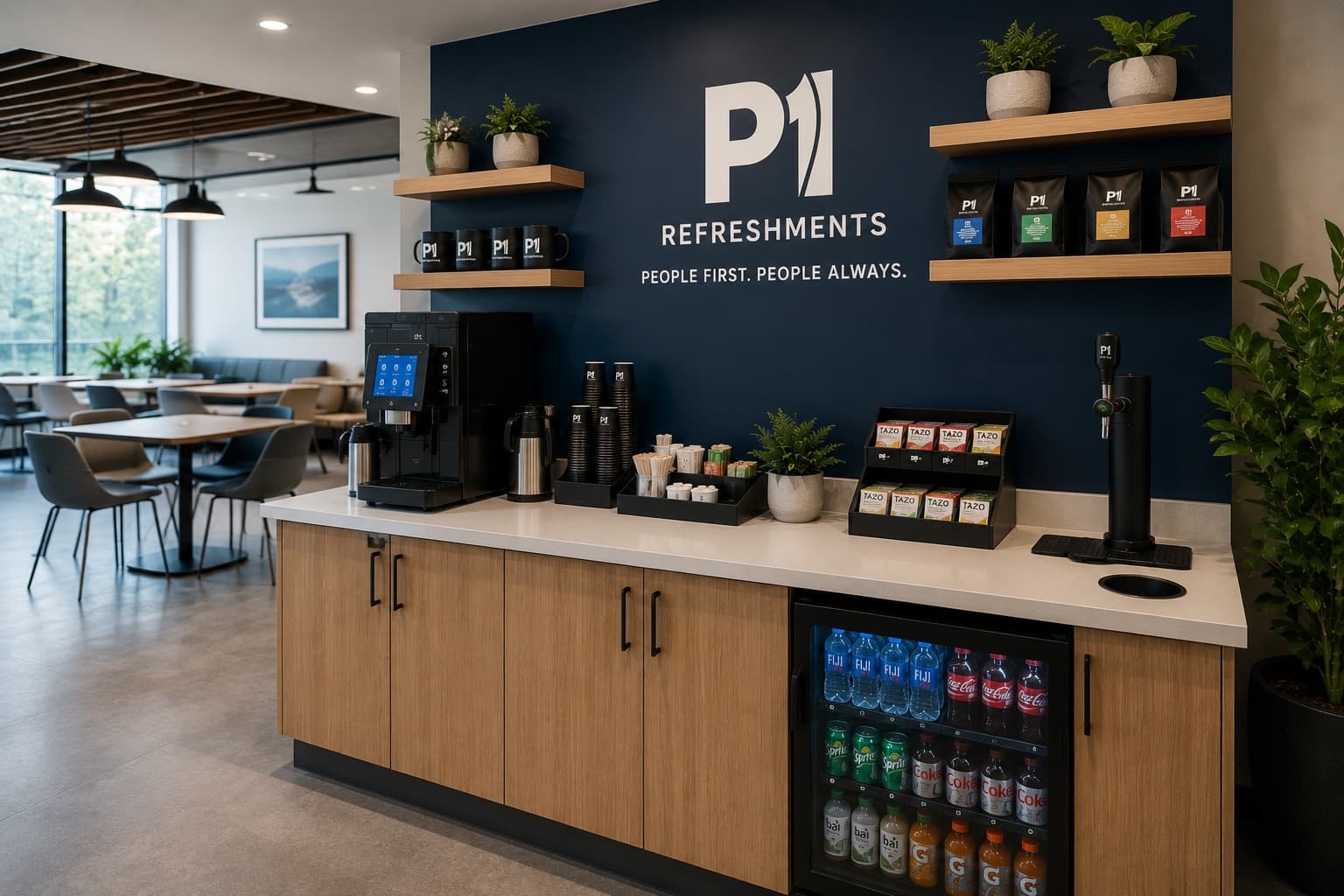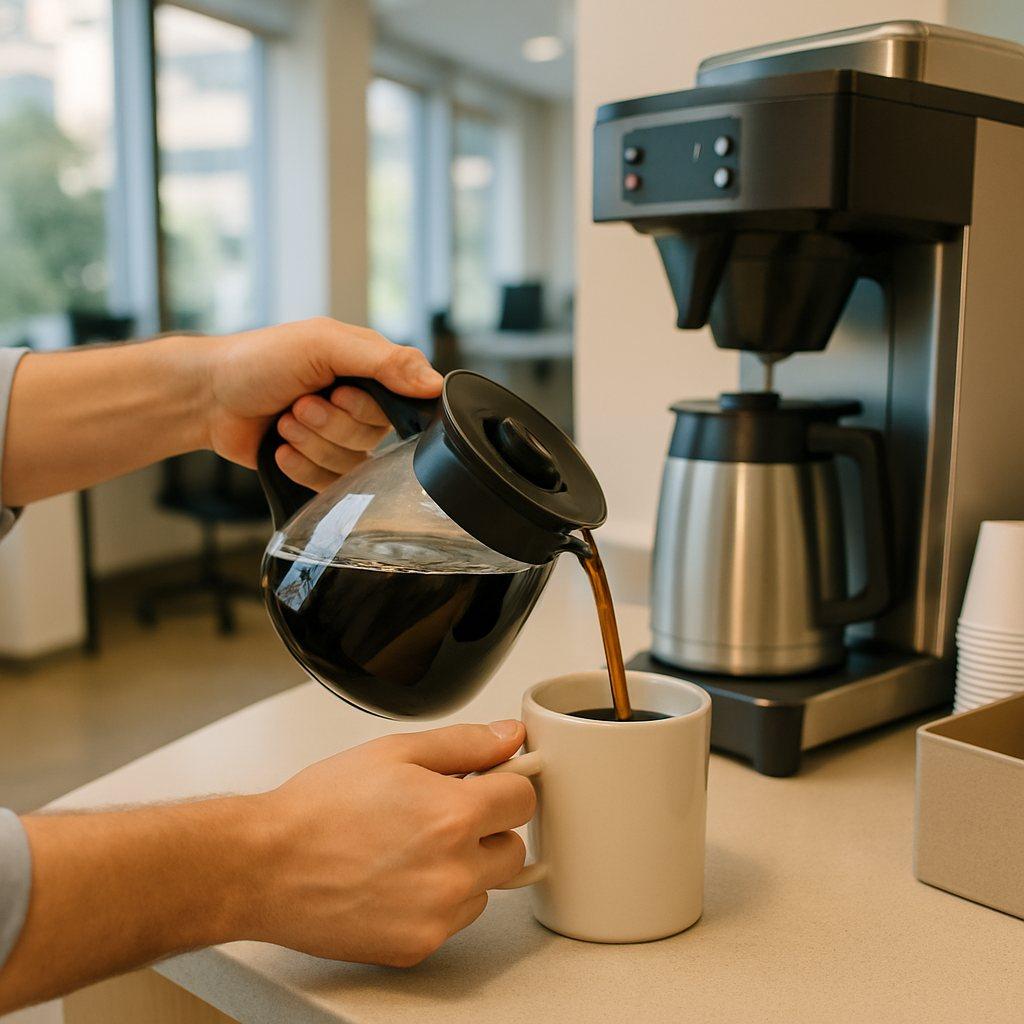
An office coffee machine does not always need plumbing — it depends on the machine. Plumbed brewers connect to a water line and refill themselves, which suits high-traffic floors; reservoir brewers are pour-filled by hand and fit smaller teams or spaces without a nearby water line. The right choice comes down to how much your team drinks and where the machine will live.
It is one of the most common questions before an office coffee setup, and a practical one: does this thing need to be hooked up to water, and is that a whole project? The short version is that you have two options, and only one of them involves a water line at all. Here is how plumbed and reservoir machines differ, what installing a plumbed unit actually takes, and why the water itself matters more than most people expect.
Plumbed vs reservoir: the two ways a coffee machine gets water
Every office coffee machine gets its water one of two ways, and that single distinction drives the install question.
A plumbed machine connects directly to a cold-water line and draws what it needs automatically. No one ever refills it; it is always ready. That hands-off quality is exactly why it suits a busy floor where a hand-filled tank would not keep up.
A reservoir machine has a built-in tank that someone pours water into by hand. It needs no water line whatsoever, so it can sit anywhere there is a power outlet, and it can be moved without a second thought. The trade is that on a high-volume floor, a reservoir can run dry at the worst moment, mid-morning rush.
Plumbed vs reservoir, side by side
The cleanest way to choose is to line them up on the factors that actually matter for a breakroom.
| Plumbed machine | Reservoir machine | |
|---|---|---|
| Water source | Connects to a cold-water line | Hand-filled tank, no line needed |
| Best for | High-traffic floors, steady demand | Small teams, low-to-moderate volume |
| Refilling | Automatic — never runs dry from forgetting | Someone refills it by hand |
| Placement | Needs a water line within reach | Anywhere with a power outlet |
| Moves easily? | Fixed once plumbed | Yes — fully portable |
| Install | A water-line tap plus power | Just plug it in |
Read across and the decision sharpens: volume and location do the work. A floor that drinks coffee all day wants the plumbed machine that never needs refilling. A small team, or a machine that has to live in a spot with no plumbing nearby, is better off with a reservoir unit. This is the same volume-first logic behind picking the brewer itself, which our guide on choosing the right office coffee machine walks through across every machine class.
What does installing a plumbed machine involve?
This is where the "is it a project?" worry usually lives, and the honest answer is: less than people fear.
A plumbed machine needs two things — a cold-water line within reach of the brewer and a power outlet. In a lot of breakrooms, a water source is already close, because there is often a sink nearby, and the connection is a straightforward tap into that existing line. Where a line is not immediately available, a plumber can usually run one without much fuss. As part of a managed program, we coordinate the equipment side and tell you up front exactly what your space needs, so there are no surprises on install day and no half-finished setup.
Is a plumbed or reservoir coffee machine better for an office?
Neither is universally better — it comes down to volume and location. A plumbed machine never needs hand-refilling, which is a genuine advantage on a busy floor where a reservoir would run dry mid-morning and leave people staring at an empty pot. A reservoir machine needs no water line at all, so it fits a small team or a spot far from plumbing, and it can be relocated whenever the office changes. Match the machine to how much your team drinks and where it will sit, and the "better" one becomes obvious for your office specifically.
Why the water itself matters
Here is the part that gets overlooked: a cup of coffee is almost entirely water, so the water quality shapes both how it tastes and how long the machine lasts.
Filtration removes chlorine and reduces the dissolved minerals that cause scale to build up inside a brewer. Left unchecked, that scale shortens the machine's life and drifts the taste off over time. On a plumbed machine, an inline filter handles it automatically; on a reservoir machine, filling with filtered water does the same job. Either way, it is not an optional nicety — it is what keeps the equipment healthy and the cup consistent. In a managed program we take care of filtration and descaling as part of routine upkeep, so you are not tracking maintenance and the coffee tastes the same in month twelve as it did on day one.
That all-handled approach is the point of our managed office coffee service and office coffee for Waco workplaces: the right machine, the right water, and the upkeep behind it, run as one job so your team just gets good coffee. For the full scope of what "managed" covers, what's included in a managed office coffee program lays it all out.
Because the water line is never really the question. The question is whether the coffee is there, hot and good, every time someone reaches for it — and that is the part we own.
People First. People Always.