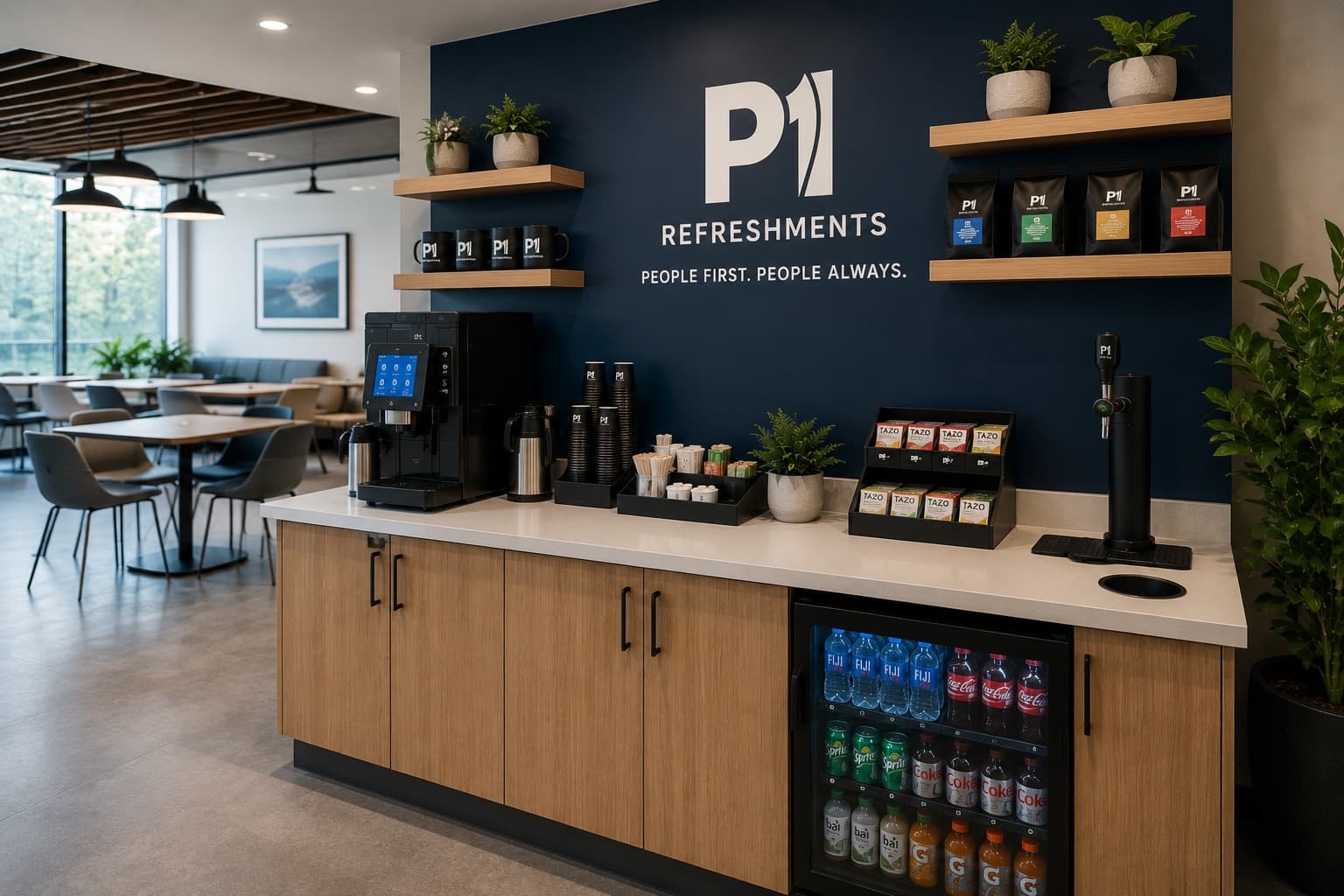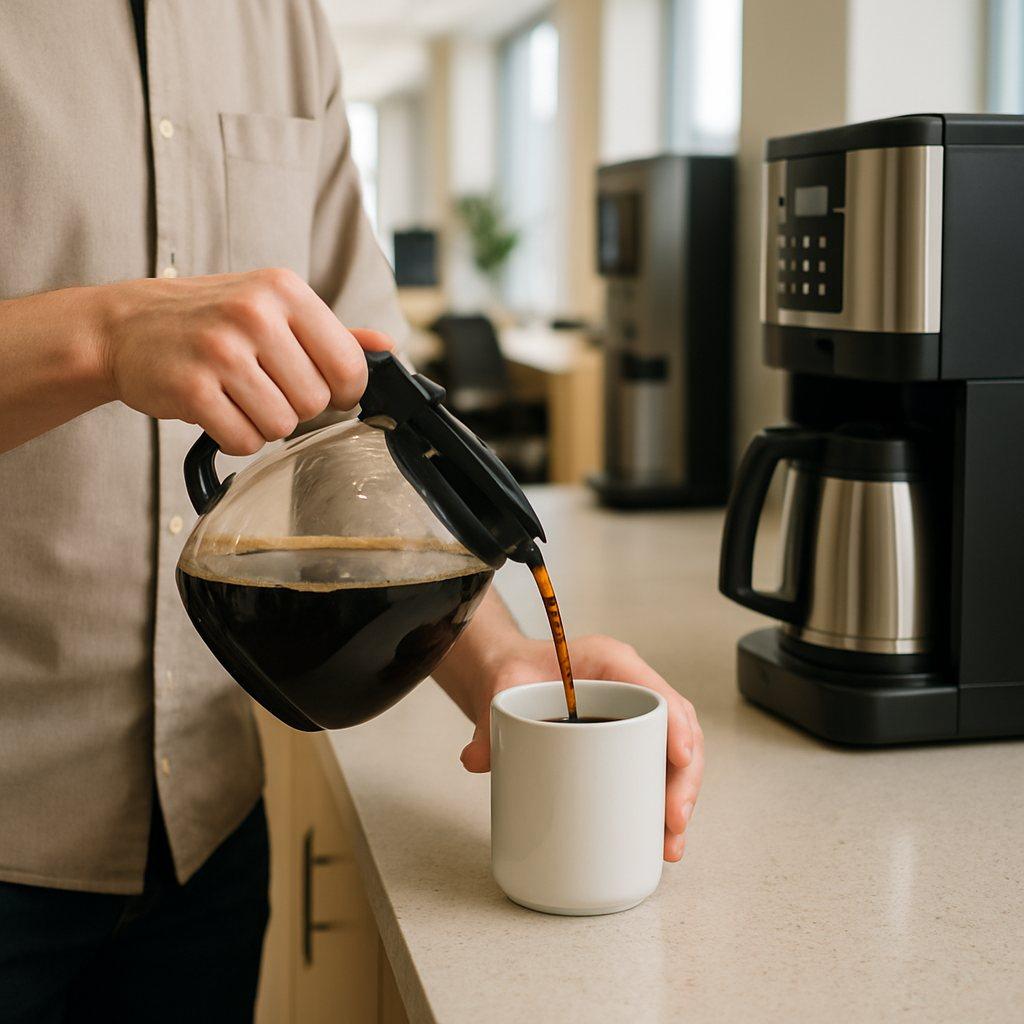
A managed office coffee program includes five things working as one: the equipment, the consumables, the maintenance and repairs, the scheduled restocking, and a single support line. The defining idea is that the whole chain is one provider's job — so a working, stocked coffee station never becomes work for your staff. "Managed" is not a coffee tier; it is who owns the running of it.
People often ask what is in an office coffee program and picture a list of products — the beans, the machine, the cups. Those matter, but they miss the real point. The thing you are actually buying when you choose "managed" is not a better grade of coffee. It is the assurance that keeping it good is someone else's responsibility.
This post breaks down the five pieces of a managed program, and what "managed" really means once you look past the product list. (If you want the same breakdown anchored to a specific market, our what's included in an office coffee service for Waco guide covers the equipment, coffee, and supplies in local terms; this one is about the management layer itself.)
What "managed" really means
The word does a lot of quiet work, so it is worth pinning down. A managed office coffee program means the provider owns and operates the whole thing — not just sells you supplies and wishes you luck.
Under a managed model, the provider owns and services the equipment, so you skip buying a machine outright and then sourcing parts and repairs yourself. The provider also handles the restocking, the upkeep, and the troubleshooting. Your side of it is small: a bit of counter space and a standard outlet. Everything that keeps coffee flowing belongs to the provider. That ownership of the entire chain is exactly what separates a managed program from a self-serve drop-off or a vending unit you are left to feed.
The five parts of a managed program
A managed program is best understood as five pieces that only work when they work together. Drop any one and the station starts to feel neglected.
The equipment
The brewing setup, matched to your team — a commercial brewer, a single-serve system, or a bean-to-cup machine as you grow. Under the managed model the provider owns and services it, so it is not a purchase you maintain.The consumables
The coffee and tea, plus the supporting cast — creamers, sweeteners, stir sticks, cups, and lids. The bucket employers forget, and the one whose absence gets noticed fastest.Maintenance and repairs
Cleaning, servicing, and fixing breakdowns. A jammed or down machine is the provider's problem to resolve, not your office manager's to troubleshoot.Scheduled restocking
Replenishment on a rhythm built around your real usage, so coffee and every supply around it stay full together — never a fresh pot beside an empty creamer shelf.One support line
A single place to call when you need something. With a local provider, that is a real person who knows your account, not a ticket in a distant queue.
Notice the through-line: not one of those five is something your team has to own. That is the whole promise — the coffee, the cups, the repair, and the restock are all one provider's job, handled together.
Managed vs. doing it yourself
The fastest way to see the value is to line a managed program up against the alternative — buying a machine and running the coffee in-house.
| What it takes | Under a managed program | Doing it yourself |
|---|---|---|
| The brewing equipment | Owned and serviced by the provider | A purchase you own and maintain |
| Coffee, tea, and supplies | Sourced and restocked for you | Ordered, tracked, and reordered by staff |
| Maintenance and repairs | Handled by the provider | Your problem when the machine jams |
| Restocking | Scheduled around your real usage | Whoever notices the creamer ran out |
| Support | One line, a real local contact | Hunting down a manufacturer or a vendor |
| Your job | Provide counter space and an outlet | Quietly manage all of the above |
Read down the right column and the hidden cost of "doing it yourself" comes into focus — it is rarely the equipment, and almost always the steady drip of small tasks that land on whoever is standing nearest the kitchen.
Does a managed program cover repairs?
Yes, and it is one of the most important parts. Maintenance and repairs are core to what "managed" means: the provider keeps the equipment cleaned and serviced and owns any breakdown, so a down machine is theirs to fix rather than yours to diagnose. With a local provider you reach a real person who knows your account when something needs attention, and a responsive team strives to respond within 24 hours so the station is rarely out of service for long.
Why the managed model holds across every kind of workplace
The reason "managed" is the standard is that it fits everywhere without forcing every office into the same setup. A small team gets a right-sized brewer and a lighter restock; a busy floor gets more capacity, more variety, and more frequent service — but in both cases the five pieces, and the ownership of them, stay the same.
That consistency is the point. Whether it is a professional office, a clinic waiting room, or a plant break room, a managed program means the same thing: the coffee is handled. If you are weighing how to acquire the equipment specifically, our guide to office coffee — lease, rent, buy, or managed compares the paths, and our case for why office coffee matters to workplace culture in Waco covers why the daily ritual is worth getting right.
That is the standard behind our managed office coffee service and our office coffee for Waco workplaces: the equipment, the consumables, the maintenance, the restock, and one support line, run as a single job so your team simply enjoys the break.
Because the best perks are the ones nobody has to manage. Good coffee, always there and always working, is one of the simplest ways to tell a team they matter here.
People First. People Always.