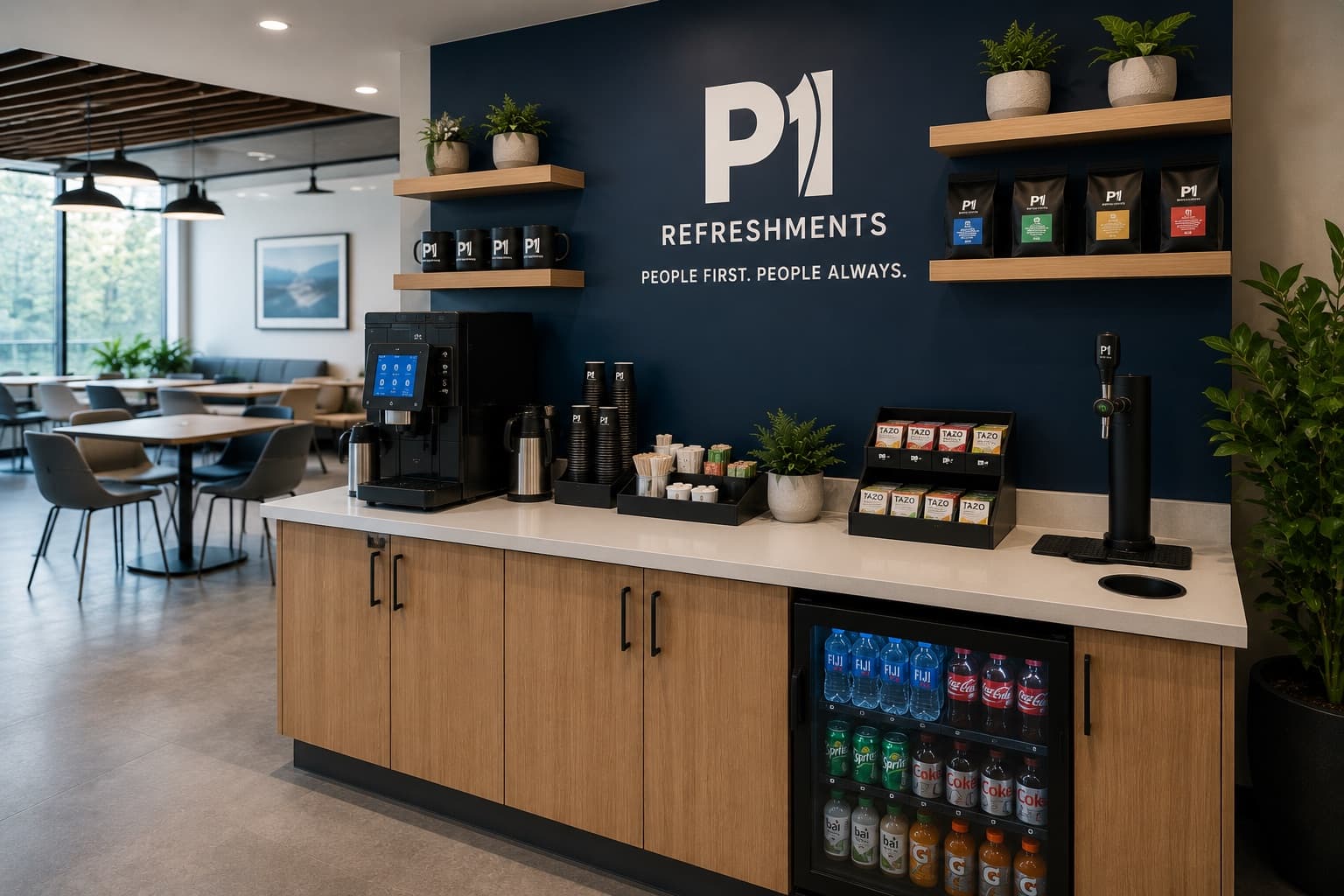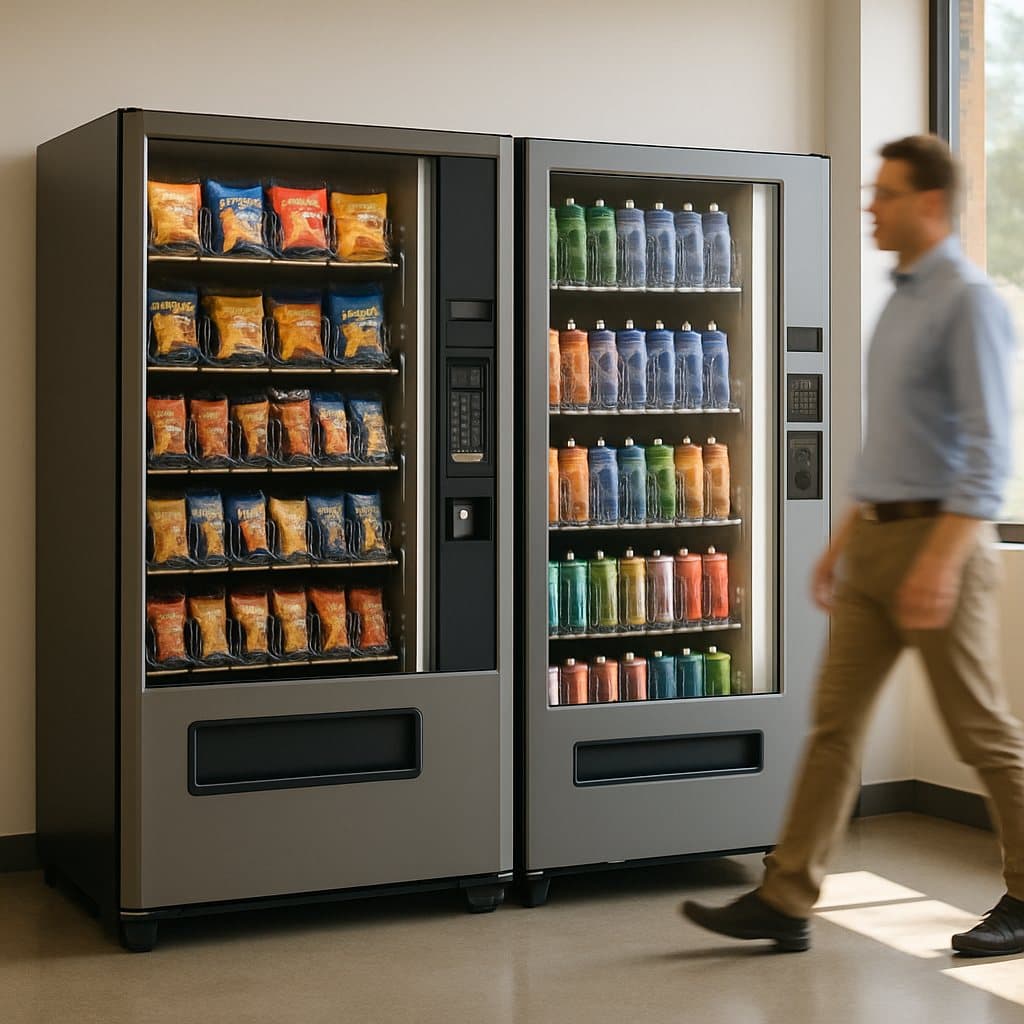
An office building vending machine works precisely where a single small tenant cannot: by pooling the foot traffic of every company in the building into one shared breakroom. Several small Waco tenants together easily clear the daily-traffic bar that none of them would hit alone, and under our no-equipment-cost model, employees simply pay per item. Shared space, combined traffic, one machine that works.
Plenty of small offices want a vending machine and assume they are out of luck because, on their own, they do not have the headcount to support one. But if that small office sits in a building with other tenants, the math changes completely. The question stops being "is my company big enough?" and becomes "is this building busy enough?" — and the answer is usually yes.
So let us talk about how vending works in a multi-tenant Waco office building, and why a shared machine often succeeds where a single-tenant one would struggle.
Can a multi-tenant office building share a vending machine?
Yes — and it is frequently the best-case scenario for vending, not a compromise.
The whole challenge for a small office is foot traffic: a machine needs enough people walking past and buying to make sense. One 15-person tenant might not clear that bar. But put that tenant in a building with three or four others, and the combined daily population walking through a shared breakroom or lobby easily does. A shared machine treats the entire building as its user base, which is exactly the volume vending is built for. Several small tenants together clear the headcount bar one office never could.
How vending works across multiple companies
The practical setup is simpler than people expect, because modern cashless vending removes the one thing that would otherwise be messy: splitting the cost.
A machine goes into a shared space — a common breakroom, a lobby, or a shared floor — and everyone in the building uses it. Since it is cashless, each person just pays for what they buy with a card or mobile wallet. There is no shared tab, no cost to divide among tenants, and no awkward "whose budget does this come from" conversation. The building owner or property manager coordinates the space and power, and we handle the rest: placement, stocking, service, and a product mix tuned to the whole building's population.
That is the elegance of it. The transaction is individual, so the shared part is only ever the convenience, never the bill.
Who pays in a shared Waco office building?
This is where the no-equipment-cost model really shines, because in a multi-tenant building the usual sticking point is "who covers it" — and the answer here is nobody has to.
Under our model, no single tenant and no building owner pays for the machine. We own and service the equipment, and employees pay per item for what they buy. That removes the entire question of allocating cost among tenants, which is often what kills a shared-amenity idea before it starts. The property simply provides the space and a standard power supply, and the building's own combined foot traffic funds the program through normal purchases. For a property manager looking to add an amenity without a line item, it is about as clean as it gets.
How many tenants does a building need to justify vending?
There is no fixed tenant count — it comes down to combined daily foot traffic, not how many names are on the directory. A building with several small offices that are full during the day can support a machine even when no single tenant could on its own. The honest test is how many people are in the building on a normal day and how often they pass the shared breakroom. We assess the building as a whole, not tenant by tenant, and tell you straight whether the traffic supports it.
Grounding it in Waco's office corridors
This setup fits a lot of Waco. The downtown corridor and the city's office clusters are full of multi-tenant buildings where several smaller firms — professional offices, agencies, and the like — share a floor or a common area. Across a workforce of roughly 66,000 people led by healthcare, higher education, and a real manufacturing base, plenty of those workplaces are exactly the kind of small-but-busy tenant that wins by pooling traffic with its neighbors. A building that empties out by mid-afternoon is a harder case; one that stays full through the day is a natural fit.
That is the lens behind our managed office vending service and our vending service for Waco workplaces: we look at the building's real daily population, not one tenant's headcount, and place a machine that the whole building keeps fed.
If you are a single tenant still unsure whether you clear the bar, how big an office needs to be for vending covers the foot-traffic math directly. And if cost is the open question for the property, whether a vending machine is really free breaks down the no-equipment-cost model in full.
Because a shared breakroom is one of the few things that makes a multi-tenant building feel like more than a stack of separate offices. A machine that is always stocked is a small, daily reason for everyone in it to feel looked after.
People First. People Always.