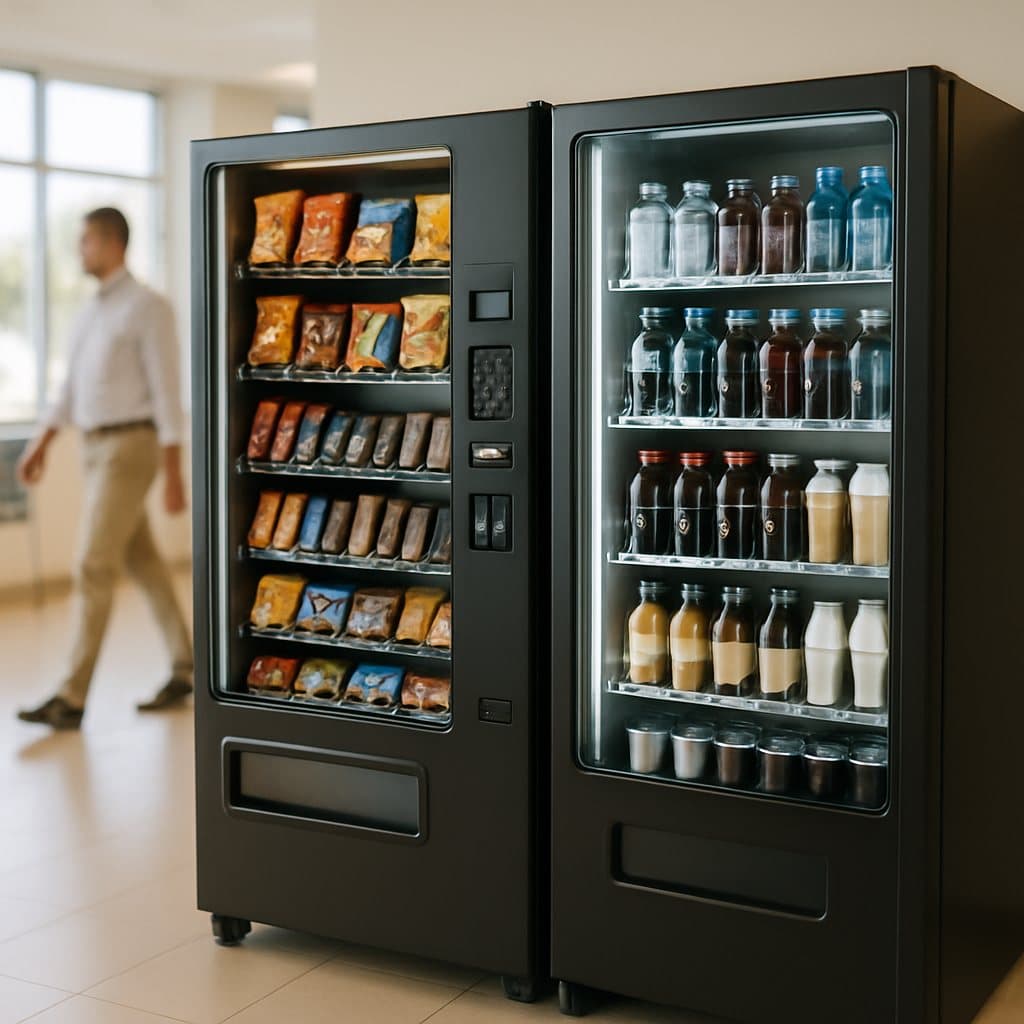
There is no magic office size for a vending machine — what matters is daily on-site users and foot traffic, not raw headcount. A common rule of thumb is roughly 40 to 50 daily users for a machine to make clear sense, but a steady 25-person Waco office can outperform a half-remote 60-person one. Real daily presence is the test.
It is one of the first questions employers ask us: "Are we even big enough for a vending machine?" It is a fair thing to wonder, and the honest answer is not the one most people expect. There is no headcount cutoff written in stone, and going by headcount alone is exactly how the question gets answered wrong.
So let us walk through what actually determines whether vending fits your Waco workplace, and how to think about it for your specific space.
How big does an office need to be for vending?
The short version: big enough that a useful number of people walk past the machine and buy something on a normal day. That is it. Everything else is detail.
A widely cited rule of thumb puts roughly 40 to 50 daily on-site users at the level where a machine comfortably makes sense. It is a reasonable starting frame — but it is a frame, not a rule. We have seen smaller offices support a machine beautifully and larger ones struggle, and the difference almost always comes down to who is actually in the building and how often they pass the breakroom.
Why foot traffic beats headcount
Here is the trap. Headcount on the org chart and people in the building on a Tuesday are two very different numbers, and a vending machine only ever sees the second one.
Think about how a modern workplace actually runs. Hybrid schedules mean a 60-person office might have 30 people in on any given day. A multi-shift manufacturing or distribution site might have fewer people total but bodies in the building around the clock. And how central the breakroom is changes everything — a machine on the main path gets used far more than one tucked down a hallway nobody walks.
So a 25-person Waco office where everyone is on-site all day, passing the breakroom constantly, can easily outperform a half-remote 60-person office that empties out by mid-afternoon. The math that matters is daily on-site users multiplied by how often they walk past, not the number on the payroll.
What if your Waco office is on the smaller side?
If your daily presence is modest, do not write off a stocked breakroom — write off the assumption that vending is the only way to get one.
A couple of honest paths open up for smaller teams:
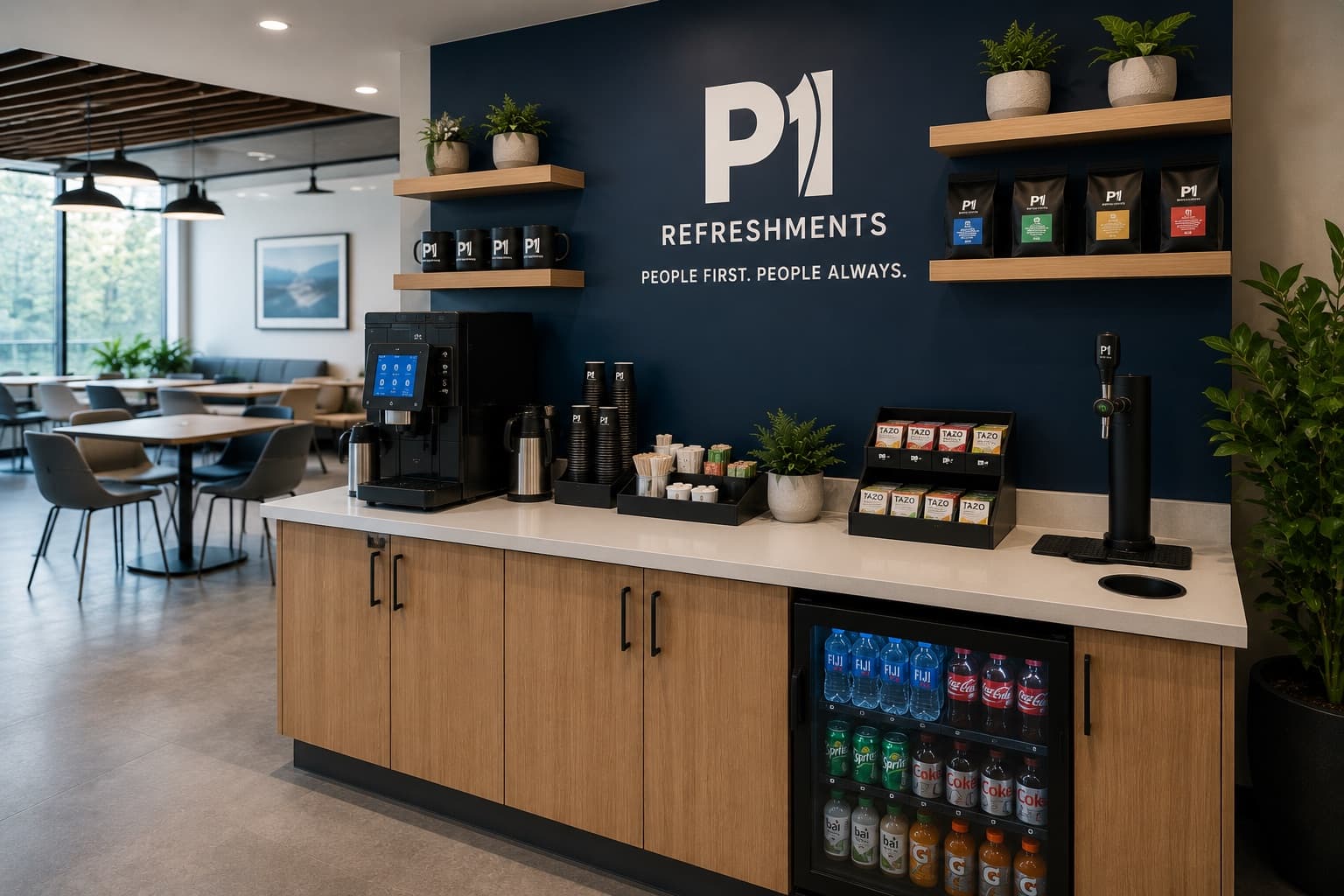
- A company-sponsored pantry. Because a pantry is an employer-funded benefit rather than a volume-driven machine, it carries no real headcount floor. It fits a small Waco team that a vending machine would not, and it sends a generous daily signal regardless of size.
- A shared building that pools tenants. Several small offices in one Waco building can together clear the foot-traffic bar that none of them would alone. If you are in a multi-tenant space, that changes the conversation entirely.
The point is that "too small for vending" is not the same as "too small for a good breakroom." It just means a different shape might fit better.
What matters more for vending, headcount or foot traffic?
Foot traffic, and it is not close. A machine earns its place on how many people pass it and buy during a normal day, not how many names sit on the org chart. Hybrid work, multiple shifts, and where the breakroom sits all bend the real number. A multi-shift site with 30 people on-site around the clock can support a machine better than a 50-person office that clears out by 3 p.m. We weigh actual daily presence, because that is the only thing the machine ever responds to.
The honest way to decide
We would rather tell you vending does not fit yet than drop a machine that sits half-used. So the way we approach it is simple: we look at how many people are really in your building day to day, how your space flows, and what your team actually wants, then we recommend what fits.
That is the standard behind our managed office vending service and our vending service for Waco workplaces — the right setup for your real daily presence, not a machine forced into a space that cannot feed it.
If a machine does make sense and you are weighing the cost, our look at whether a vending machine is really free covers the no-equipment-cost model. And if your team is on the larger side and outgrowing a row of machines, vending or a micro-market for a growing Waco team walks through that next step.
Because the right breakroom is not the one that checks a headcount box. It is the one that actually serves the people who walk past it every day.
People First. People Always.