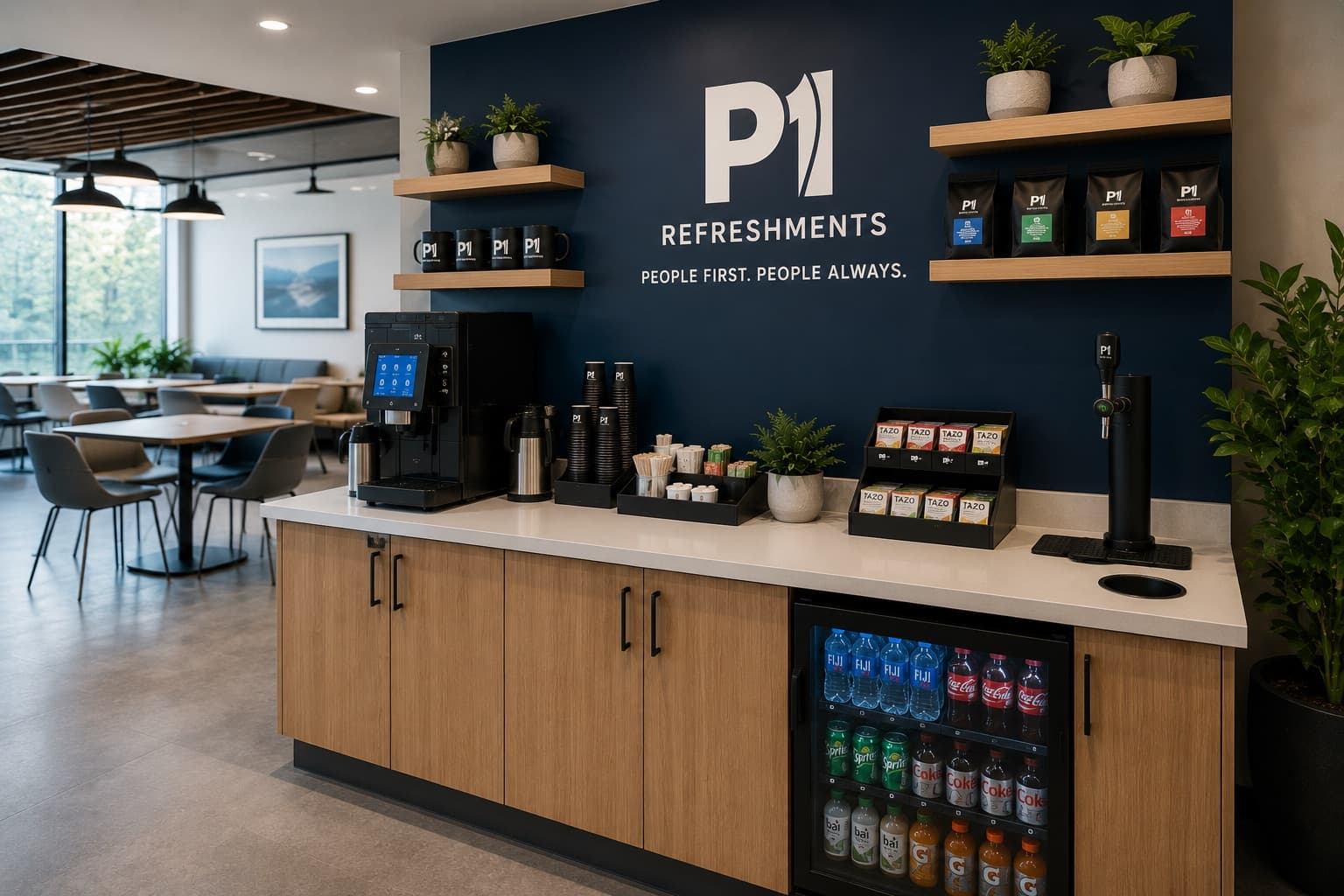
A micro-market is an always-open, self-checkout store in the breakroom that feeds every shift fresh meals and far wider choice than a machine — which is why a round-the-clock logistics site on Hewitt's I-35 corridor tends to outgrow vending first.
A half mile off I-35, Hewitt has a working freight corridor most people drive past without thinking about. Along Enterprise Boulevard and Alliance Parkway sit the kind of operations that move product all day and all night — Averitt's freight and supply-chain facility at 679 Alliance Parkway, FedEx Ground next door at 685 Alliance Parkway, the Class-A buildings of Sun Valley Industrial Park, and the heavy-equipment and distribution names clustered around them. Run a little further up Hewitt Drive into the Greater Waco stretch of the corridor and the distribution centers only get bigger.
These are facilities with serious headcounts and round-the-clock shifts. A crew of dozens, sometimes far more, working through the night with a short break and not much open nearby. When that crew gets hungry at 2 a.m., a couple of vending machines in the corner stop being enough.
That is the point where a micro-market starts to earn its footprint.
Why distribution and logistics breakrooms strain vending
Vending is a fine fit for a lot of workplaces — we install plenty of it, and along this corridor it is often the right floor. But a logistics operation puts two specific pressures on a breakroom that a machine alone struggles with: volume and hours.
When a large shift breaks at once, a single machine becomes a bottleneck and a fixed row of snacks reads as a tired menu fast. Add overnight and weekend shifts, when nothing nearby is open, and people start driving off-site for a real meal — which eats their break and slows your floor. The machine is not failing; it was just never built to feed a whole shift a proper lunch at 3 a.m.
Why does a logistics corridor strain a breakroom more than a typical office?
Because freight does not keep office hours. A 3PL or fulfillment operation like the ones on Alliance Parkway runs receiving, sorting, and dispatch around the clock, so there is no single lunch rush — there are several, at hours when every restaurant off the Hewitt Drive exit is dark. Drivers turning trailers, yard staff, and dock crews all break on a tight clock, and a row of machines simply cannot put a real meal in front of that many people across that many shifts.
How far is the nearest meal from a site on this corridor?
Far enough to matter. The industrial belt sits roughly half a mile off I-35, and once you are inside Sun Valley Industrial Park or out on Alliance Parkway, a sit-down meal means getting back in a vehicle and rejoining the interstate — easily most of a thirty-minute break gone before the food arrives. Run a little up Hewitt Drive into the Greater Waco stretch, where the larger distribution centers cluster, and that gap only widens. An on-site market erases the drive entirely.
What does a micro-market add over vending for a logistics crew?
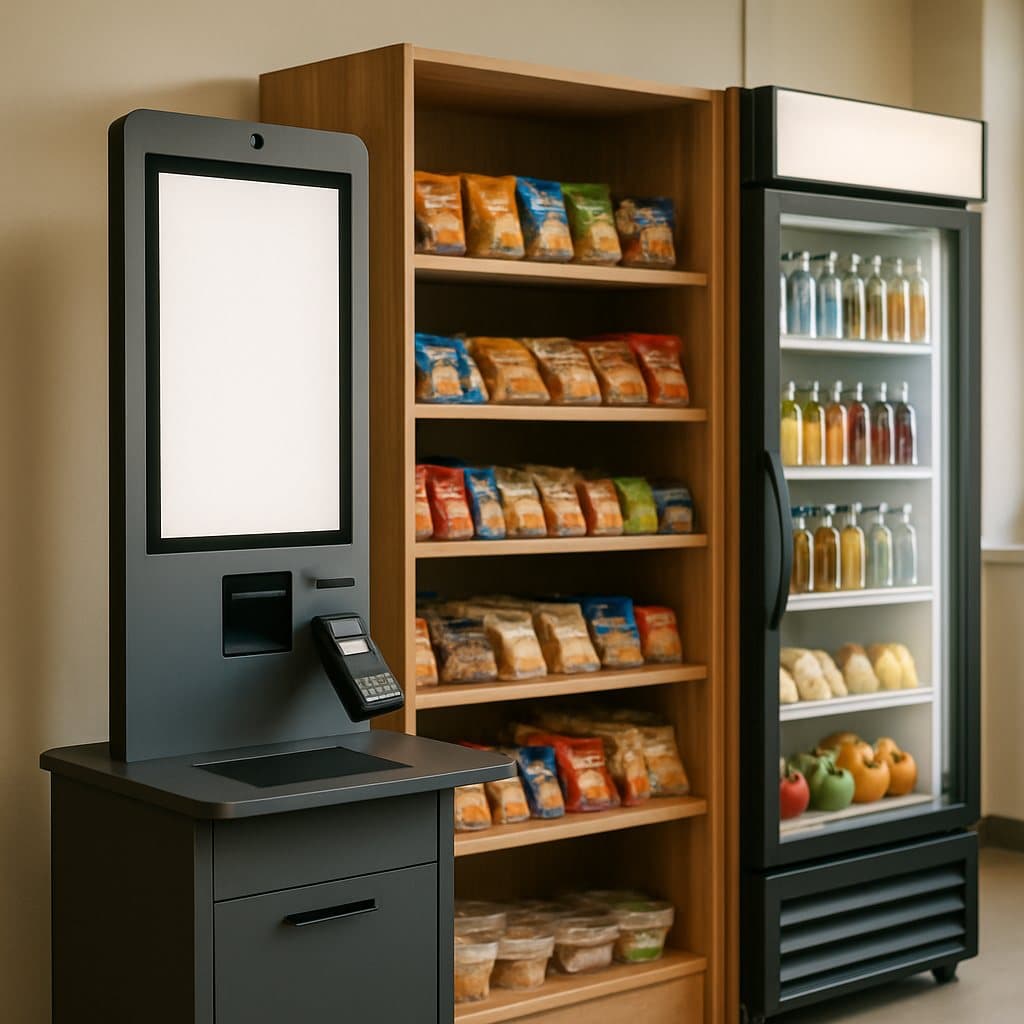
The real upgrade is fresh food and open access. A micro-market is a small self-service store: open shelving of snacks and drinks alongside refrigerated cases of entrees, wraps, fruit, yogurt, and proper hot-or-cold lunches — the kind of meal a glass-front machine simply cannot stock.
For a corridor site where the nearest sit-down meal is a genuine drive away, that changes the math on a short break. A worker grabs a fresh meal, checks out in seconds at the kiosk, and still has time to actually sit down before heading back to the line. And because the whole selection is out in the open rather than behind glass, a hundred people can move through it without funneling past one machine.
It feels less like a vending alcove and more like a small store that happens to live in your building.
Around the clock, with no cashier
The thing that makes it work for a 24-hour operation is that there is no cashier and no fixed hours. The market is simply open.
Designed around your peak shift
We study your headcount, your hours, and the room you have, then scale the market to the busiest moment — when the most people break at the same time.Stocked for this corridor's crews
Shelving and refrigerated cases are weighted toward what your particular freight or warehouse team reaches for, not a generic planogram.Self-checkout, no bottleneck
A kiosk handles the sale in seconds, so an entire shift can eat without anyone funneling past a single point — at any hour of the day or night.Kept full on your rhythm
We watch what sells and refill on a cadence matched to your shift pattern, rotating product, so the overnight and weekend crews are never met with empty shelves.
That always-open design is the whole reason a market suits a distribution floor. The third-shift worker gets the same fresh selection the day crew did, without anyone having to staff a counter for them.
Payment built for a shift workforce
People clocking onto a freight dock rarely have a wallet on them, so the checkout is designed to not need one. It reads Apple Pay and Google Pay, takes cards, and where it makes sense, ties into a payroll-deduction program.
On a logistics schedule, that range pays off. With payroll deduction, lunch is effectively settled before the worker even walks up; with a phone tap, there is no fumbling at a terminal that only accepts one format. Either way the buyer is in and out in a few seconds, and whatever brief queue might form clears almost as fast as it appears.
Does payroll deduction make sense for a large freight workforce?
For most of them, yes. A distribution or 3PL site with a high headcount and steady turnover benefits from a checkout that does not depend on anyone carrying a wallet onto the floor — and payroll deduction is the cleanest fit. Workers opt in, purchases post against pay automatically, and the whole crew can use the market without cash ever entering the building. For a freight operation running hundreds of people across shifts, that simplicity is the difference between a market people actually use and one they walk past.
Setup and upkeep are entirely on us
Every operations lead asks the same thing before they say yes, and our answer never changes: the breakroom does not become your problem.
From the first install through every refill, we run it — tracking what the crew actually buys, replenishing on a rhythm tuned to your volume, cycling product so it stays fresh, and keeping the kiosk and coolers working. That end-to-end ownership is the whole point of our managed micro-market service. A round-the-clock site already has plenty to manage without a market added to the list. And since we are based right here, you are never routed into a faraway call queue; you reach a real person who knows your account, and we strive to respond within 24 hours. That same hands-off promise sits behind our micro-market service for Hewitt-area facilities.
If you are weighing the move up from machines, our look at vending for Hewitt's warehouse and distribution crews covers where vending still fits this corridor, and the Hewitt employer's guide to breakroom options maps every choice side by side.
Because every name on that shift roster is a person putting in a hard, often odd-hour day along the interstate. A fresh meal they did not have to leave the building for is one real way to tell them it counts.
People First. People Always.