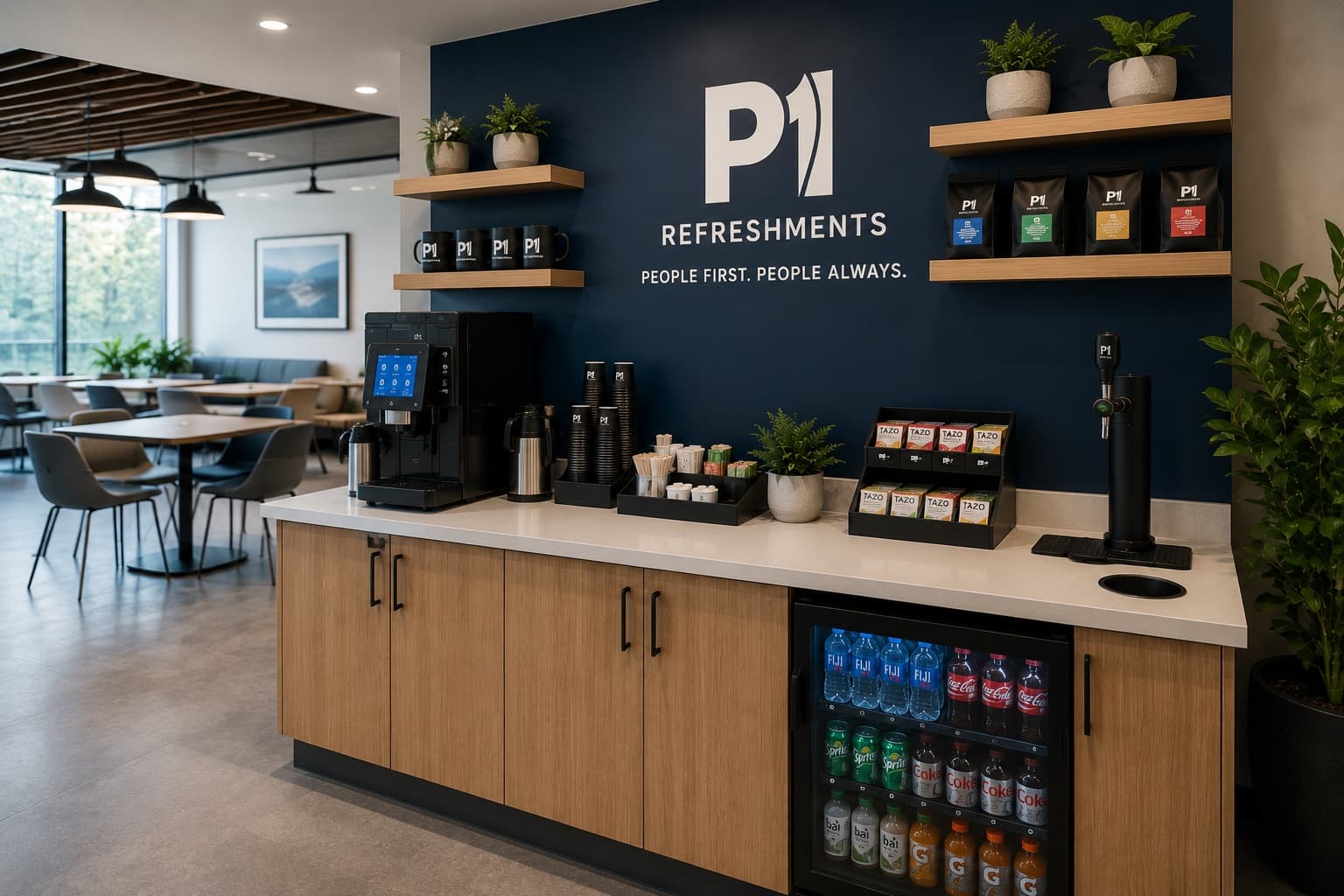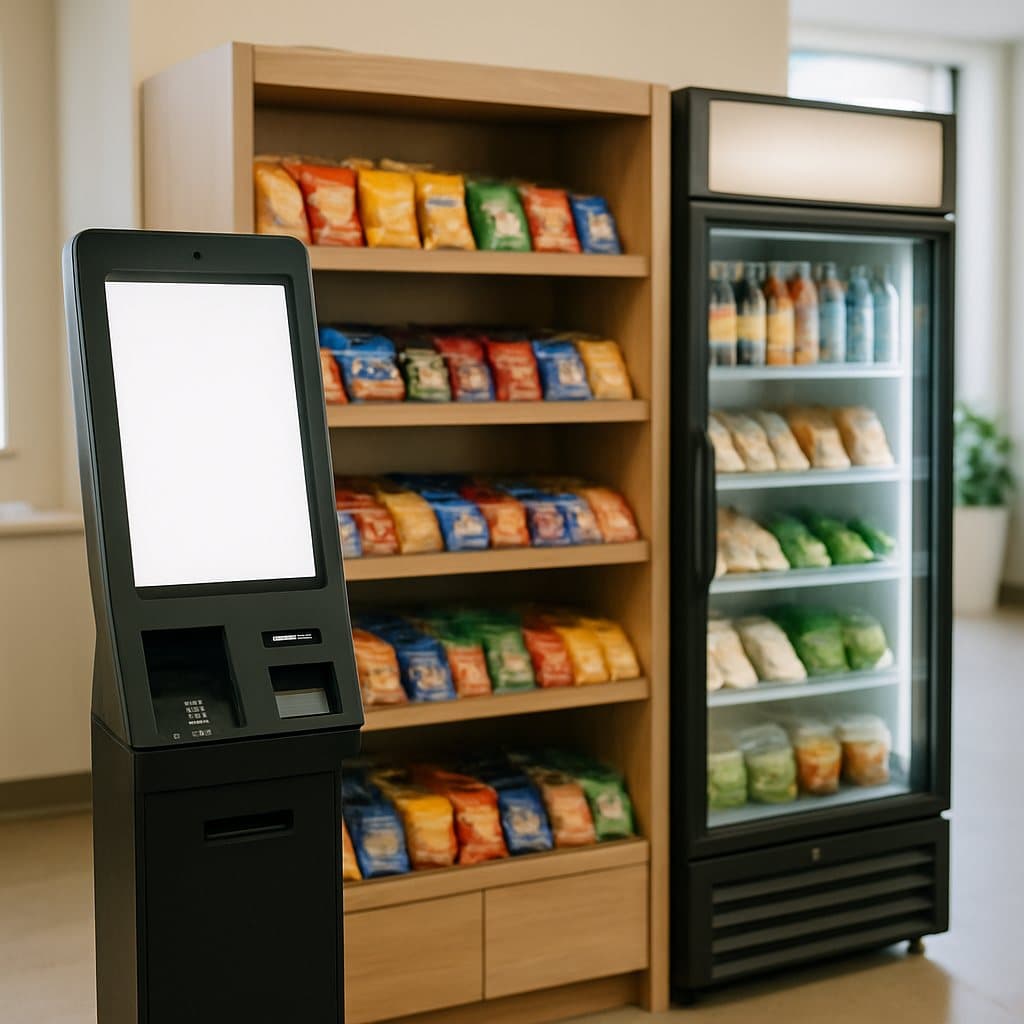
A vending machine dispenses 40 to 60 items from behind glass; a micro-market is an open, self-checkout store carrying 150 to 400-plus items, including fresh food a machine cannot hold. Vending fits smaller spaces and headcounts and needs about 15 to 20 square feet. A micro-market fits larger, higher-traffic sites, wants a footprint starting around 150 square feet, and trades a small amount of shrink for far more variety. Neither requires the employer to fund the food in the no-cost model.
"Micro-market or vending" is one of the most common questions a workplace asks about its breakroom, and most of the answers online are really sales pitches for whichever one the writer sells. So here is the straight version, with real numbers and the honest trade-offs, including the ones a vendor would rather skip. By the end you should be able to tell which one your site actually needs — and we will say plainly when the answer is vending.
Micro-market vs vending: what's actually different
Both keep snacks and drinks available at work. The difference is the format, and the format changes almost everything downstream.
A vending machine is a sealed unit: you choose from a grid behind glass, pay, and it dispenses. Simple, compact, reliable. A micro-market is an open retail space — shelves, coolers, and a self-checkout kiosk — that you walk into, browse, and pay for like a small store. That single shift, from a closed machine to an open store, is what unlocks fresh food, far more variety, and a breakroom that feels like a place rather than a wall.
The honest side-by-side
Here is the comparison with real ranges, including the trade-offs — shrink, space, headcount — that the glossy versions tend to leave out.
| Vending machine | Micro-market | |
|---|---|---|
| Product range | ~40-60 items per machine | ~150-400+ items, including fresh food |
| Avg spend per user | Around $7 per month | Around $20 per month |
| Fresh meals | Limited to packaged | Salads, sandwiches, full meals |
| Throughput | A few people at a time | Self-checkout clears a full shift |
| Space needed | About 15-20 sq ft | Starts around 150 sq ft |
| Shrink (loss) | Effectively none (closed) | Roughly 2-5%, managed with cameras + kiosks |
| Best fit | Smaller teams, tight space | Larger, higher-traffic sites |
Read it as a whole, not row by row. If most of the micro-market column describes your site — a big crew, room to spare, people who want fresh lunch without leaving — a market likely earns its footprint. If the vending column fits, a machine is the smarter, leaner call. The numbers are starting points, not verdicts; your actual floor decides.
Which costs more, a micro-market or vending?
Cost is where the honest answer surprises people, so it is worth separating two different questions.
For the employer, both vending and micro-markets are built around employee purchases, so neither requires you to fund the food in the no-cost model. For the employee, published industry figures suggest the average micro-market user spends more per month than a vending user — roughly $20 against $7. That gap is not a markup; it is the market simply offering more worth buying. Fresh meals, more brands, and real variety mean people find more they want, not that each item costs more.
So "which costs more" depends entirely on who you mean. To the company, the model is the same. To the person using it, a market is a store they will reach for more often because it actually carries what they want.
Is theft a problem in an open micro-market?
This is the objection every employer raises, and dodging it would be dishonest, so here is the real number.
What is a typical micro-market shrink rate?
Shrink in a workplace micro-market is real but small — published industry ranges put it around 2 to 5 percent. It stays low for reasons that are easy to verify: self-checkout kiosks record every transaction, cameras cover the space, and the people using it are coworkers in a shared workplace, not anonymous foot traffic. A market runs on a small community that polices itself far better than a public store ever could. We will name the honest range up front and show you exactly how a closed base and the kiosk keep it down. Our deeper look at micro-market theft and the honor system covers it in full.
How do you choose for your workplace?
Strip away the format talk and the choice comes down to four things: headcount, space, fresh-food appetite, and how your team breaks.
- Headcount. Vending tends to stay the smarter call for smaller on-site teams; a micro-market starts to pay off as headcount and foot traffic climb, sooner with multiple shifts or no nearby food.
- Space. If you have only a corner, vending fits where a market cannot. A market needs room to be a store.
- Fresh food. If "lunch" today means a drive off-site, fresh meals are the strongest reason to consider a market. A machine cannot replace that.
- Throughput. When a whole shift breaks at once, self-checkout clears a crowd a coin slot never will.
Whatever the answer, the standard behind both is the same one in our managed micro-market service and our micro-market service for Waco workplaces: stocked before it runs out, backed by a local team you can actually reach. If you want the full mechanics first, what a micro-market is, for employers explains how the open-store model works end to end.
Because the right answer is not the bigger breakroom or the fancier one. It is the one that fits the people on your floor and how they actually work.
People First. People Always.