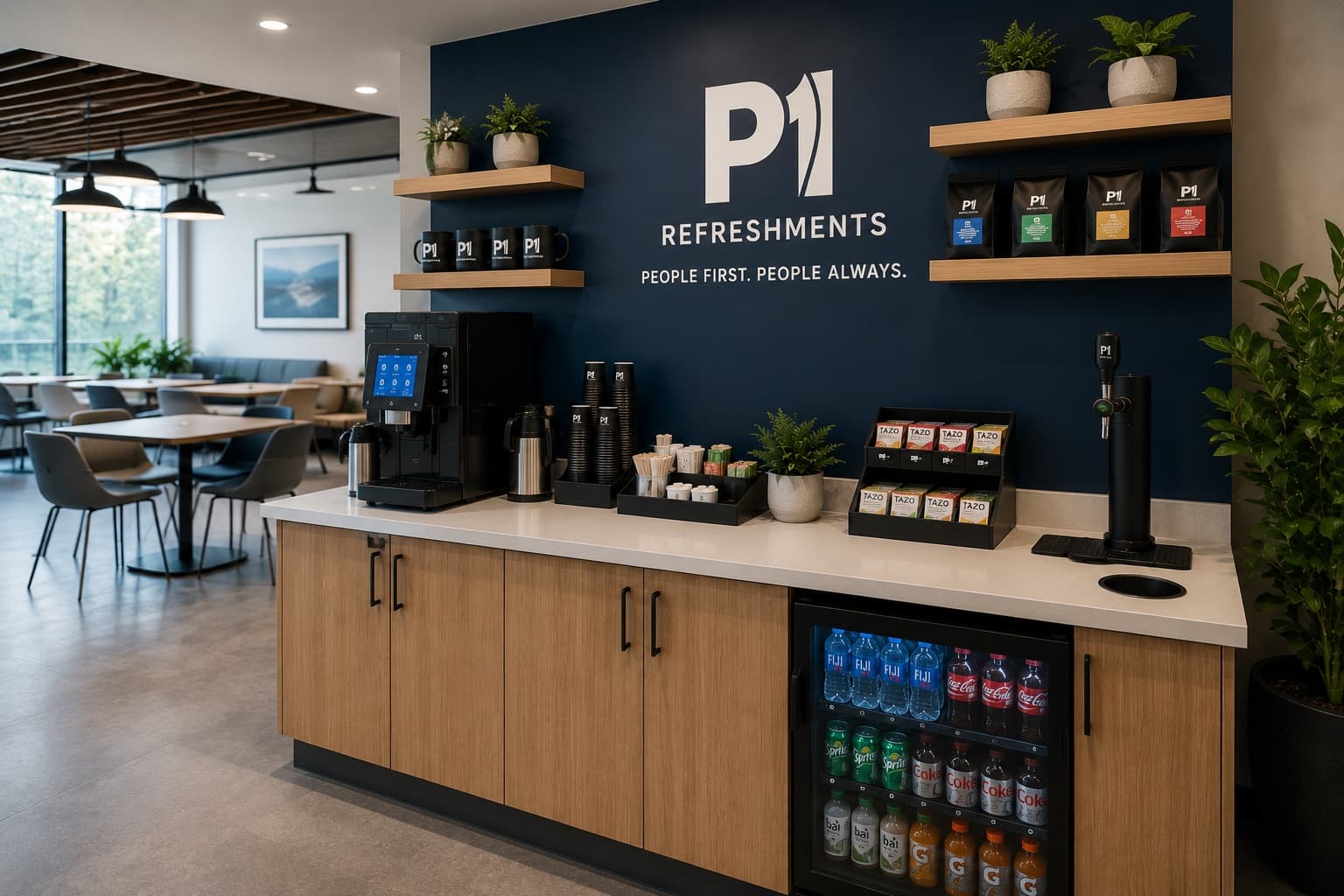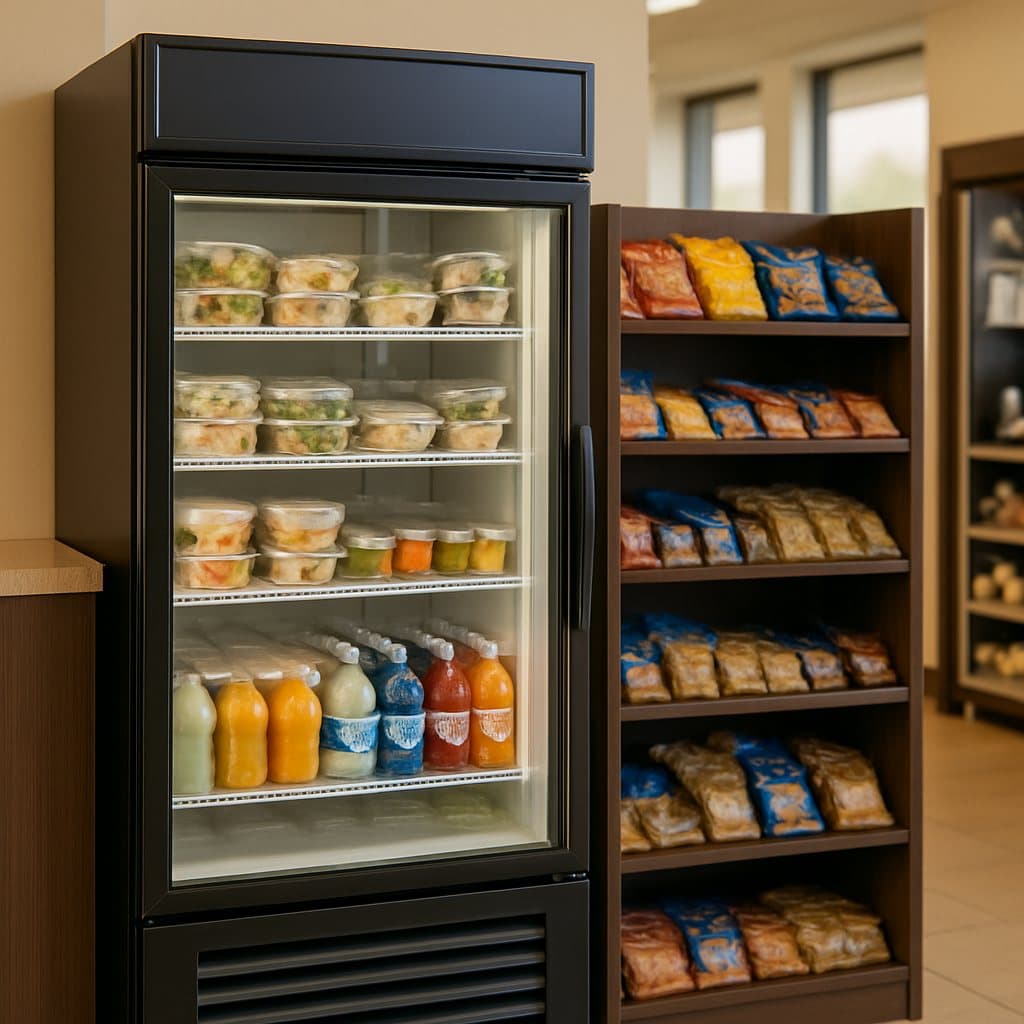
A micro-market's cost to a Waco employer comes down to one choice: managed or self-built. Under a managed model the provider owns and services the fixtures, coolers, and kiosk, so you avoid the upfront capital outlay and pay for a managed service; a self-built market runs a published $10,000 to $25,000-plus buildout. We scope the managed program to fit your space and team, not a fixed package.
There is a moment, usually right after an employer realizes a micro-market would beat a row of vending machines, when the next question lands: "Okay, what does this actually cost us?"
It is the right question, and we answer it the same way every time. There is no off-the-shelf price, and the number depends heavily on one decision: managed or self-built. What we can do is be clear about both paths, frame the self-built side against real published ranges, and never invent a P1 figure.
Managed vs. self-built: the decision that sets the cost
Almost everything about micro-market cost comes down to who owns the equipment.
Under a managed model, a provider like P1 Refreshments supplies and installs the shelving, coolers, and self-checkout kiosk, then stocks and services it. Because the provider owns that equipment, you skip the upfront capital outlay a self-built market requires, and employees pay per item at checkout. The managed program itself is a service we scope to your operation, and the main thing on your side is the space and a standard power supply.
If a company instead chooses to build and run its own market, the equipment becomes a capital purchase, and the staffing and stocking become an ongoing internal job. That is a real, sometimes substantial, upfront cost.
What does a self-built micro-market cost?
If you are weighing the self-built route, it is fair to want a frame for the spend. Because the model is build-to-fit, the honest way to sketch it is against the industry's own published ranges. These are useful reference points for what a company-owned buildout tends to run, before we right-size anything to your Waco space and usage:
| Cost element | Published industry range (self-built) | Under a managed model |
|---|---|---|
| Equipment & buildout (fixtures, coolers, kiosk) | Commonly cited around $10,000 to $25,000+ total | Owned and serviced by the provider |
| Self-checkout & payment tech | Part of the buildout above | Provided and maintained by the provider |
| Stocking & restocking labor | An ongoing internal staff job | Handled by the provider |
| What employees pay | Per item at self-checkout | Per item at self-checkout |
| Space & power | You provide | You provide |
Those buildout figures are published industry ranges, not our price, and we do not work off a fixed package. They simply show why most Waco employers choose the managed route: the variety and fresh food of a market, without the capital cost or the staff hours of running a small store.
What drives the cost either way?
Whichever path you take, a few things move the number. Under a managed model these sit with us; if you self-build, they become your outlay.
- Footprint and fixtures. A compact market with a few shelves and one cooler sits at one level. A full market with multiple coolers, ambient shelving, and fresh-food cases sits at another.
- Self-checkout and payment technology. The kiosk, cameras, and cashless payment, including Apple Pay and Google Pay, are part of what makes a market run.
- Product range. A market built around snacks and drinks differs from one carrying salads, sandwiches, and fresh meals. Fresh food is the differentiator, and it shapes the spend.
We make all of this clear up front, so there is no mystery and no fine print.
What does a managed micro-market actually cost the employer?
Under a managed model, you do not buy the equipment, the fixtures, or the self-checkout kiosk — the provider owns and maintains them — so you skip the upfront capital cost a self-built market carries. Employees pay per item at checkout, and you provide the space and a standard power supply. The managed program itself is a service we price around your operation; what you are really avoiding is the capital outlay of building and staffing your own store.
Grounding it in the Waco you operate in
It helps to set the cost against the market you are hiring in. The typical Waco household earns about $51,468 a year, and across a workforce of roughly 66,000 people led by healthcare, higher education, and a real manufacturing base, the on-site amenities that save people time land hard. A market with fresh food matters most where leaving the building for lunch costs a real chunk of the day, which is exactly the case on Waco's larger healthcare and higher-education campuses.
That is the lens we bring: a micro-market should make sense for your business and genuinely serve your people. When both are true, and especially when the managed model spares you the capital outlay of building your own, the decision gets a lot simpler.
Does a micro-market cost more than vending?
Not necessarily. Our no-equipment-cost vending program carries no equipment cost, and a managed micro-market means the provider owns the equipment rather than you buying it, with employees paying per item either way. The real difference is fit, not price. A market offers more variety, fresh food, and self-checkout, which suits a larger on-site team; vending suits a smaller or more compact space.
If your team is outgrowing its machines, our look at vending or a micro-market for a Waco warehouse walks through that exact upgrade. And the mechanics are the same across our managed micro-market service and everything in our micro-markets for Waco workplaces: under the managed model you provide the space, we provide the rest, and the market stays stocked without becoming a job for your staff.
Because the return on a micro-market rarely shows up on a receipt. It shows up in the person who grabbed a real lunch without leaving the building on a packed day, and that is the whole point.
People First. People Always.