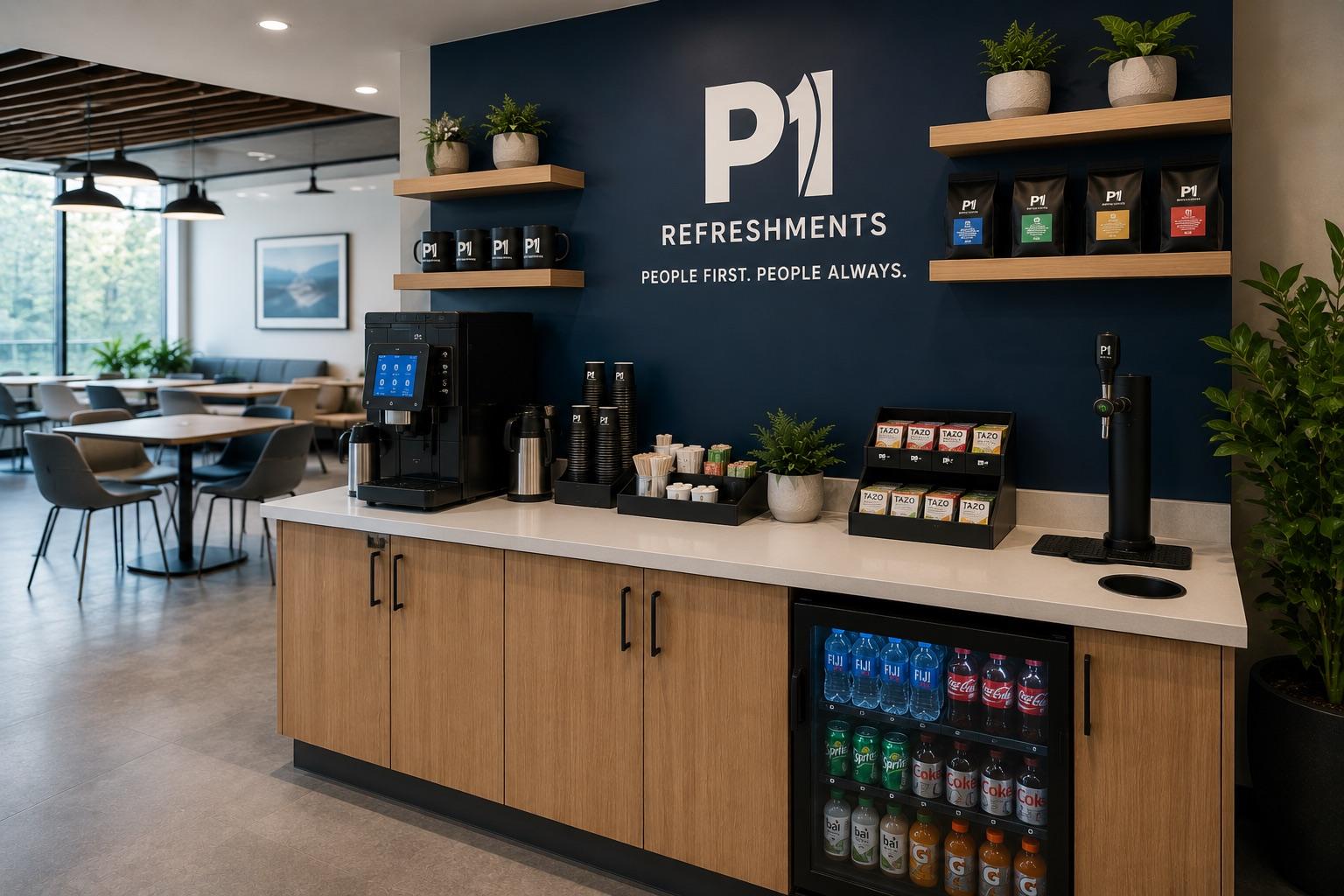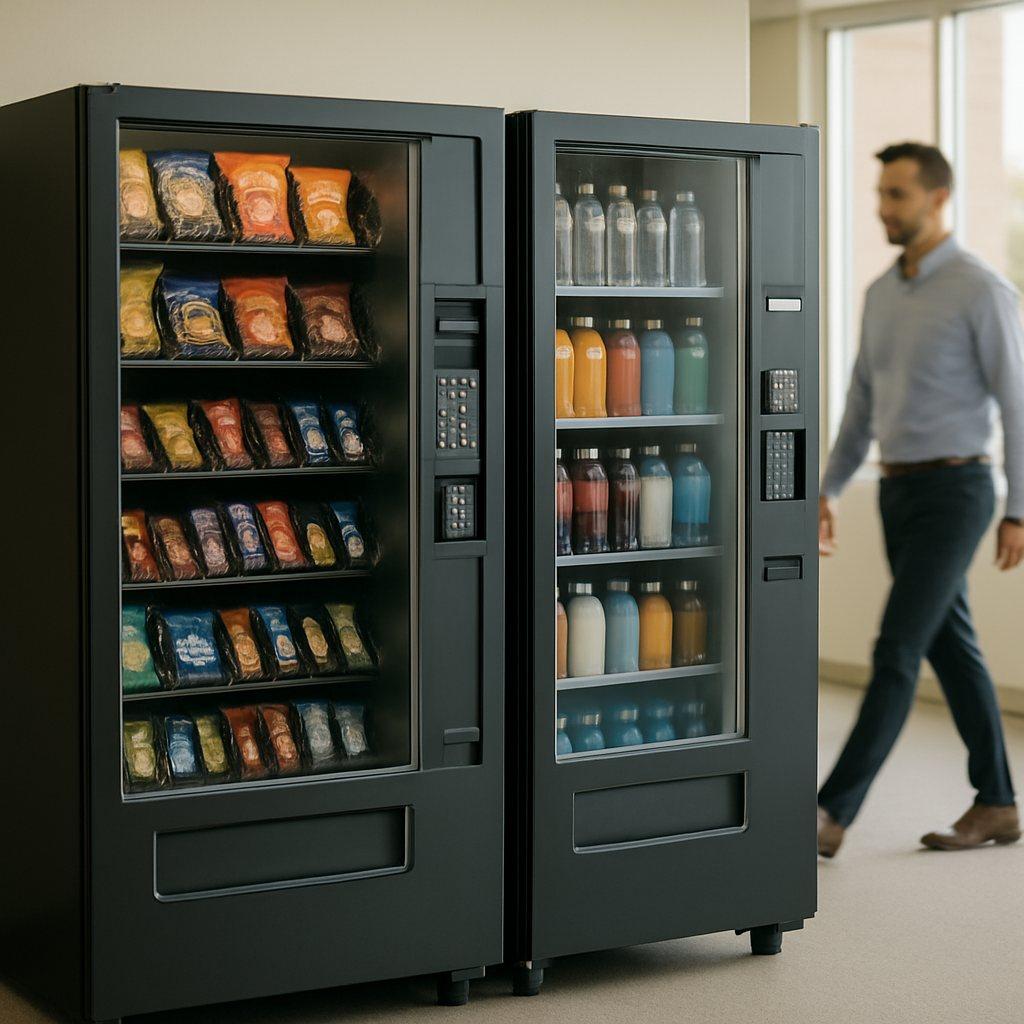
At a Waco shift site, the local-versus-national vending choice comes down to one thing: who gets the machine restocked and working before the next crew clocks in. A nearby operator can plan restocks around your shift pattern and respond fast when something breaks; a distant national route truck runs a fixed schedule that often leaves an off-peak crew staring at empty coils. Proximity is the advantage that actually shows up at 2 a.m.
Plenty of Waco's largest workplaces never stop running. Manufacturers and distribution sites staff second and third shifts, and the people working those hours have the fewest options when a machine goes empty. There is no store run at 2 a.m. The vending machine is the break.
That is the lens this post takes. The broad local-versus-national case is its own topic, but at a 24-hour site one factor outweighs the rest, so it is worth looking at on its own.
The 2 a.m. test: who restocks the off-peak shift?
Here is the scenario that decides it. A machine empties out during the overnight shift. With a national vendor, service usually runs on a fixed route-truck schedule across a wide territory, so the fix may not arrive until the truck's next planned daytime pass. The crew that hit the empty machine finished their shift hours ago. They never got served.
A local operator works differently because it is built around the area, not a national map. Routes can be planned around your actual shift pattern, and when something breaks, a nearby team can react instead of waiting for the next scheduled sweep. The machine gets filled before the crew arrives, not after they have already given up on it.
This is not a knock on national companies' effort. It is a matter of distance and a rigid schedule. The closer and more flexible the operator, the better an off-peak shift gets served.
How a local operator keeps a night shift stocked
Two things let a nearby provider serve shift crews the way a route truck struggles to.
- Remote inventory monitoring. The technology flags low stock before a machine runs dry, so a restock can be timed to land before the overnight crew arrives. The machine never has to go empty first for anyone to know it needs filling.
- Routes planned around your shifts. Because we cover Greater Waco, we can schedule service around when your people actually work, instead of fitting your site into a distant truck's fixed daytime loop.
And when something does need a human, you reach one who already knows your site. We strive to respond within 24 hours, and you are not transferred through departments or routed to a service center in another state. For a facility manager juggling a 24-hour operation, that single accountable contact is worth a great deal.
Why do national vending routes struggle with off-peak shifts?
It comes down to geography and scheduling. A national route truck typically runs a fixed daytime schedule across a broad territory, so a machine that empties at 2 a.m. waits for the next planned pass, which the affected crew will miss entirely. A local operator covering the Waco area can plan around your shift pattern and respond quickly because the drive is short and the schedule is yours, not a region's. The problem was never effort. It is distance and a rigid route.
Does local mean less capable for a big facility?
It is a fair worry, and the answer is no. Local does not mean small-scale. A nearby partner brings the same modern tools a large site needs, with more willingness to tailor them:
- Modern cashless machines. Apple Pay, Google Pay, and major cards, so a worker on a break is never hunting for change.
- Rugged, industrial-suited equipment and a product mix tuned to shift crews, leaning on energy, hydration, and hearty options for long hours.
- Room to grow. As a site scales, a bank of machines can become a micro-market with more variety and self-checkout, without changing who you call.
The flexibility runs opposite to what people expect. Being close and accountable is what makes a local provider quicker to adapt to a 24-hour operation, not slower.
Grounding it in Waco's shift economy
This matters here because of who works in Greater Waco. The area's roughly 66,000-person workforce includes a real manufacturing base, with marquee shift employers like L3Harris Technologies and the Mars Wrigley confectionery plant, alongside distribution and industrial sites that run around the clock. Those are exactly the floors where an empty 2 a.m. machine is felt most, and where a nearby operator earns its keep.
The broader case for going local, across response time, who answers the phone, and flexibility, is in our local versus national vending company guide for Waco, and the shift-floor product and reliability side is in vending for Waco manufacturing and shift work. The reason it all works the way it does traces back to being a local, woman-owned vending company in Waco: decisions made here, by people accountable to this community.
That is how we approach our managed vending service and our vending for Waco workplaces: routes built around your shifts, machines monitored so they do not go dark, and a real local person who picks up.
Because at 2 a.m., a stocked machine is not a convenience. It is the company quietly telling the overnight crew that they matter too, and that is the whole point.
People First. People Always.