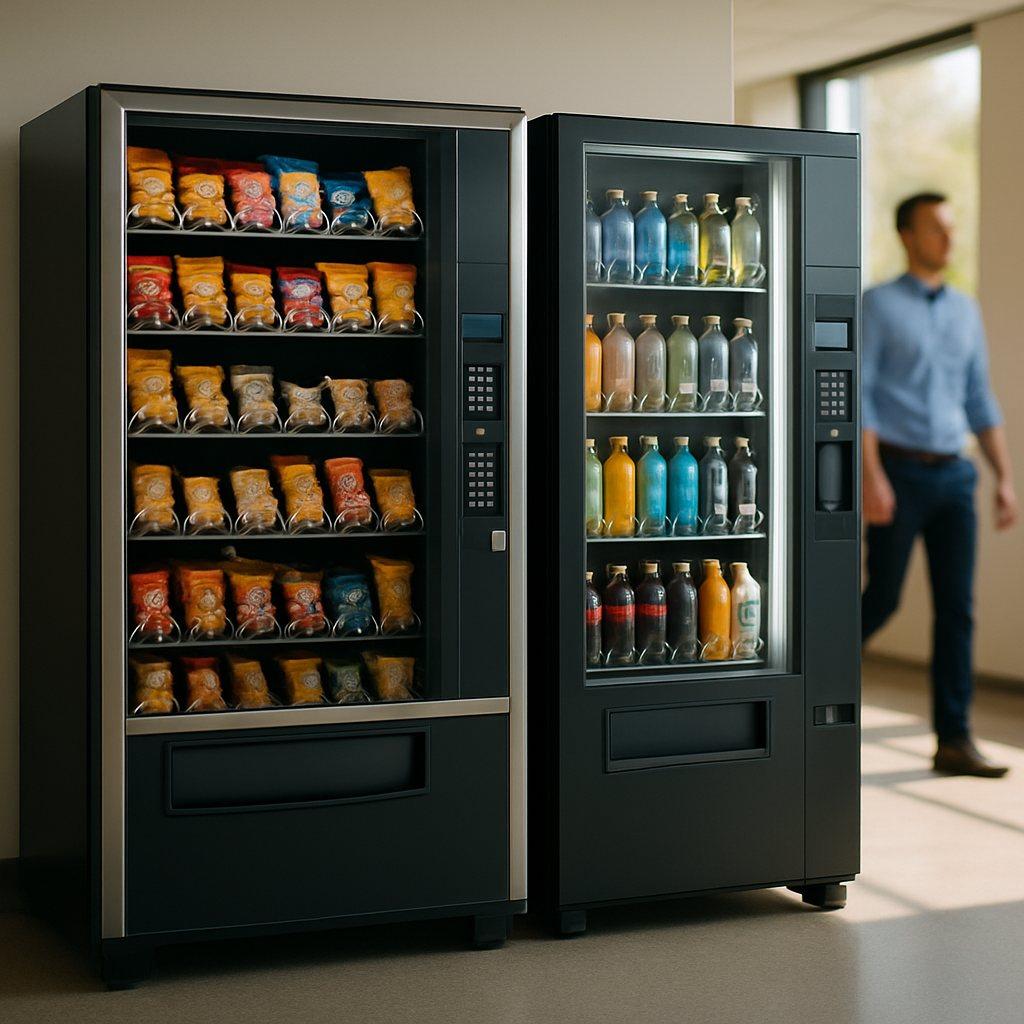
A vending machine is typically restocked about once a week as a baseline, with high-traffic or multi-shift sites needing two to three visits a week — but good restocking follows demand, not a fixed calendar. Remote monitoring lets us refill popular slots before they run out. Cadence should track reality, not a rigid schedule.
It sounds like a simple question with a simple answer: how often does someone come refill the machine? But the real answer is the difference between a breakroom that is reliably stocked and one that is always empty when you need it. Because the frequency is not really the point — what the frequency is based on is.
So here is the straight version: the typical cadence, what changes it, and why the best restocking does not run on a calendar at all.
How often is a vending machine restocked?
As a baseline, a standard office machine is often serviced about once a week. That is the figure most people are looking for, and for a quieter workplace it is usually about right.
But "once a week" is a starting point, not a rule. A high-traffic breakroom or a multi-shift site frequently needs two to three visits a week to stay full, because the popular items drain far faster. The trouble with any fixed number is that it ignores what is actually happening inside the machine. A rigid weekly stop means the favorites sell out on Tuesday and sit empty until the next Monday, while the slow movers stay full the whole time. That is how a machine ends up "always empty" despite being on a schedule.
What determines the right restocking frequency?
The honest cadence comes from your workplace, not a template. Three factors drive it more than anything else.
Daily users
How many people actually use the machine on a normal day. A full building burns through stock far faster than a half-empty one, and foot traffic past the breakroom matters as much as headcount.What they buy
Fast-moving favorites — popular drinks, the go-to afternoon snack — empty quicker than slow movers. The product mix decides which slots need attention first.How many shifts
A single-shift office draws down stock during business hours. A multi-shift manufacturing or distribution site pulls from the machine around the clock, which can double or triple the needed cadence.
Put those three together and the right frequency falls out naturally. A quiet single-shift office may be perfectly served weekly; a busy 24-hour site might need three visits. The number is an output of demand, not a decision made in advance.
Why the best restocking ignores the calendar
Here is the upgrade that changes everything: the machine tells us when it needs a refill.
Remote inventory monitoring reports what is selling and what is running low in near real time. Instead of refilling on a fixed day regardless of what is inside, we can see that the bottled water is draining fast this week and route a restock before the slot hits empty. For a high-traffic Waco workplace, that means the popular item is there at 3 p.m. on a Thursday, not sold out until next week's scheduled stop. The cadence flexes up exactly when and where it is needed, and an unexpected demand spike triggers an alert rather than an empty row.
What happens if a machine runs out before the next restock?
With monitoring in place, it should be rare — the whole point is to refill before a slot goes empty, not after someone complains. If a busy week draws a machine down ahead of schedule, a low-stock alert lets us add a visit instead of waiting for the next calendar date. And because we run local Greater Waco routes, we can actually respond quickly when that happens, so an empty row does not sit for days. The fixed-date stop is the thing that fails your team; a demand-driven route is what keeps the favorites available.
Reliable stock is the real promise
At the end of the day, restocking frequency is just a means to one end: when your team walks up to the machine, the thing they want is there. We would rather measure ourselves on that than on hitting a date on a route sheet.
That is the standard behind our managed office vending service and our vending service for Waco workplaces — a cadence built around your actual demand, with monitoring so the busy slots stay full.
If a chronically empty machine is the problem you are really trying to solve, our piece on why the office vending machine is always empty digs into the service behind it. And if you are weighing the model itself, whether a vending machine is really free covers the no-equipment-cost arrangement in plain terms.
Because a breakroom only works when it is actually stocked. Everything about how often we visit is built to make sure it is.
People First. People Always.