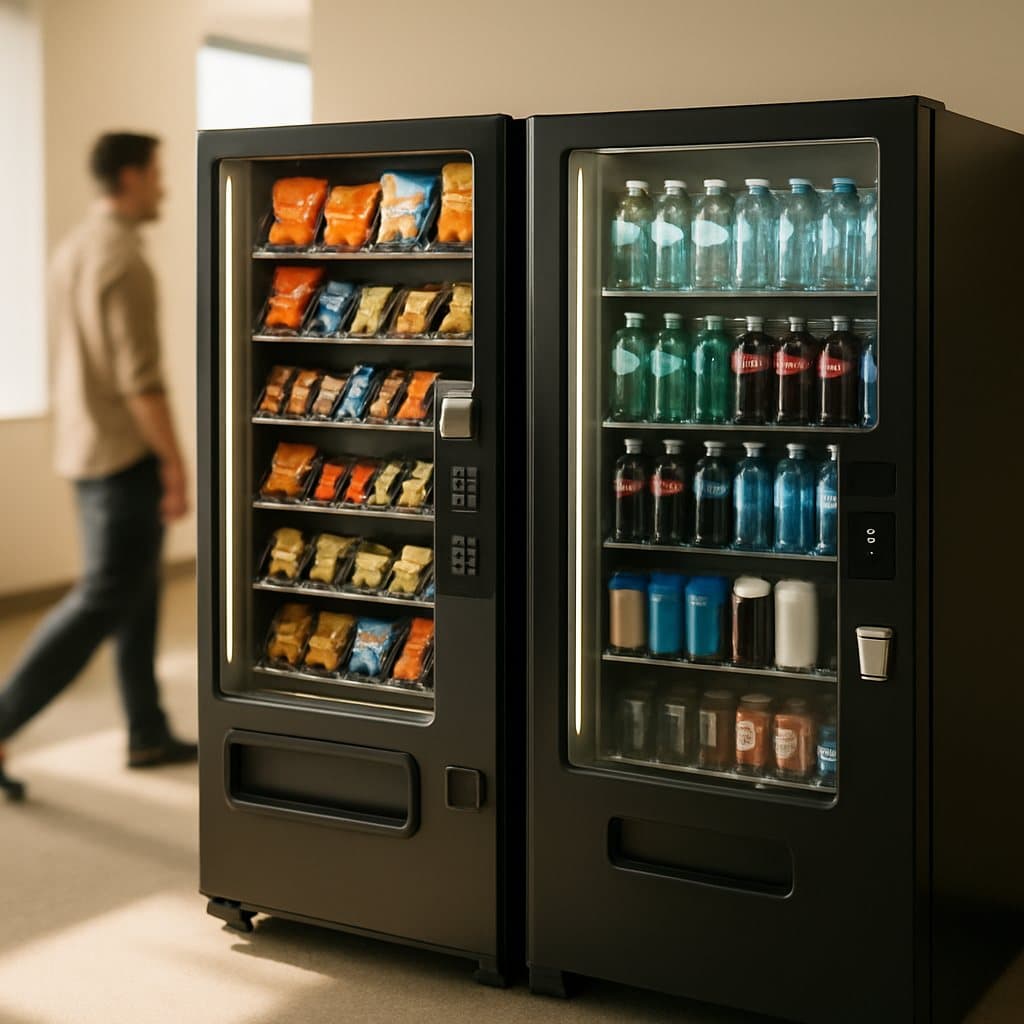
How many employees do you need for a vending machine? There is no magic number. Most managed providers like to see roughly 40 to 50 regular daily users to place a machine at no cost — but that is a guideline, not a rule. Steady foot traffic, long hours, and how far the nearest food is matter more than raw headcount, and a shared-tenant building or strong visitor traffic can clear the bar on its own.
It is an understandable thing to assume otherwise. A vending machine reads as something for a big plant or a busy distribution floor — not a six-person insurance agency off North Hewitt Drive, a small law office downtown, or a dental practice with a handful of staff. So the breakroom stays bare, or it limps along on whatever someone remembered to grab from the store.
That is the question we hear all the time from small employers in Hewitt, usually said a little apologetically: "We are probably too small for a vending machine, right?" The honest answer from people who set these up for a living is that plenty of small Hewitt offices fit a breakroom solution just fine.
The honest answer: there is no magic headcount
People want a clean cutoff — twenty employees, fifty, some line you cross to "qualify." That line does not really exist.
A vending program is not one fixed package you either earn or do not. What actually matters is whether a machine would get used enough to stay fresh and worth having. A small team in the right setting can absolutely clear that bar, and a larger team in the wrong one sometimes does not. So instead of asking how many people you have, the better question is how your people would actually use it.
That is a question we are happy to work through with you, honestly, before anything gets installed.
What actually decides it
If headcount is not the deciding factor, a few practical things are. These are what we look at together.
Foot traffic
How often people are actually in the building and moving past the breakroom matters more than the raw employee count. A small but always-on office can support a machine a larger, mostly-remote one cannot.Your hours
A team that works long or odd hours, when nothing nearby is open, gets more out of an on-site machine than a nine-to-five office a block from a dozen lunch spots.Available space
Even a single machine needs a spot near power. If you have a corner of the breakroom to give it, that is usually all it takes.Nearby options
If the closest food is a real drive away, a machine earns its place quickly. If there is a cafe next door, a smaller pantry or a coffee setup might serve you better.
None of these is a pass-or-fail test on its own. They add up. An office that scores low on headcount but high on hours and distance-from-food can be a great fit, and we would rather walk through that with you than send you a brochure with a minimum on it.
Is vending only for big companies?
No. Plenty of small Hewitt offices run a single machine or a small pantry instead, and the right setup depends on your team and how it actually uses the breakroom, not just the size of your headcount. A six-person office that is always on site, keeps long hours, or sits a real drive from food can get more from a machine than a larger, half-remote team next to a dozen lunch spots. The honest measure is use, not headcount.
Why a small Hewitt office can still make sense
Hewitt's small-business layer is exactly where this comes up most. The southwest corridor is full of sub-twenty-five-person teams — insurance agencies, small law firms and accountants, the dental and medical offices clustered along North Hewitt Drive and Sun Valley Boulevard — that quietly assume vending is "for the big companies down the road."
A lot of them are wrong about that. A single well-chosen machine from our managed vending service, stocked with what that specific team actually reaches for and kept full by us, can be a genuinely good fit for a small office. And if your suite alone is on the smaller side, a shared breakroom in a multi-tenant building — where your team and the neighbors all use the same machine — often clears the bar even when one office would not. Because the equipment carries no cost to your business, trying it does not mean a capital outlay you have to justify to anyone.
When a pantry or coffee fits better than vending
Here is the part most vendors skip: sometimes the answer really is "not vending."
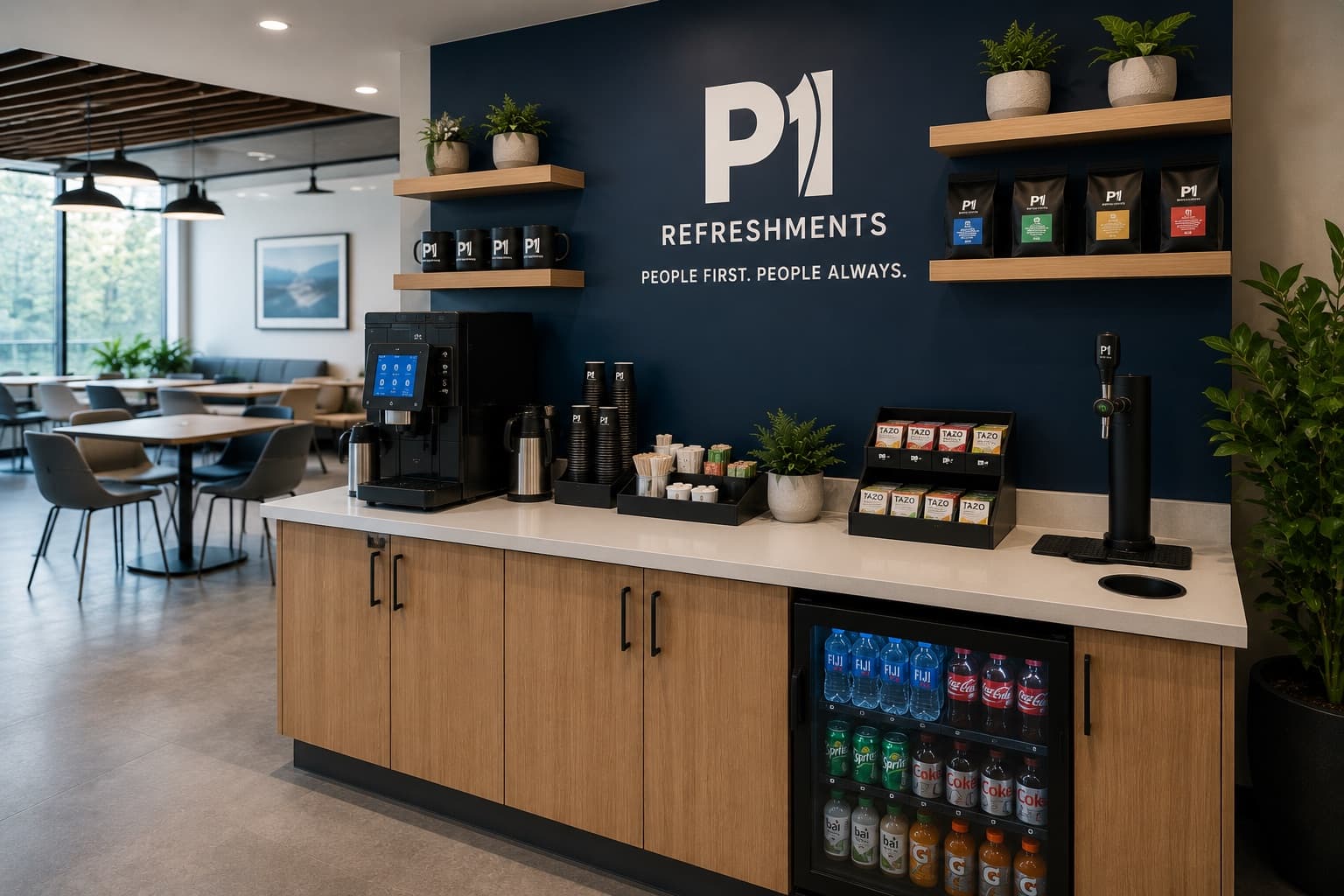
If your office is small enough or close enough to food that a machine would mostly sit there, we will tell you. For some Hewitt teams, a simple company-sponsored pantry program — a stocked shelf of snacks and drinks the employer covers — is a warmer, better-used fit than a coin-operated machine. For others, a good office coffee setup is all the breakroom really wants. None of those is a bigger sale for us; they are just sometimes the right call, and we would rather get it right than get a machine in the door.
That is the difference between a vendor working a quota and a local partner trying to fit the solution to your people.
How we figure it out with you
We do not lead with a pitch, and we do not believe in cookie-cutter programs. The conversation starts with listening — your workplace, your employee count, your hours, and what you want the breakroom to feel like — before we recommend anything at all.
And because we are nearby, we stay responsive. When you have a question or need service, you reach a real person who knows your account, not a distant call center routed through layers of departments. We strive to respond within 24 hours and to be honest with you at every step, including when the honest answer is that a machine is not the right fit yet.
If you want the bigger picture across all four breakroom options, our Hewitt employer's guide to breakroom options maps them out. But if you run a small office here and have wondered whether you "qualify," the short version is simple: ask us. The number that matters is not your headcount — it is whether your people would be better off with something in that breakroom than nothing.
People First. People Always.