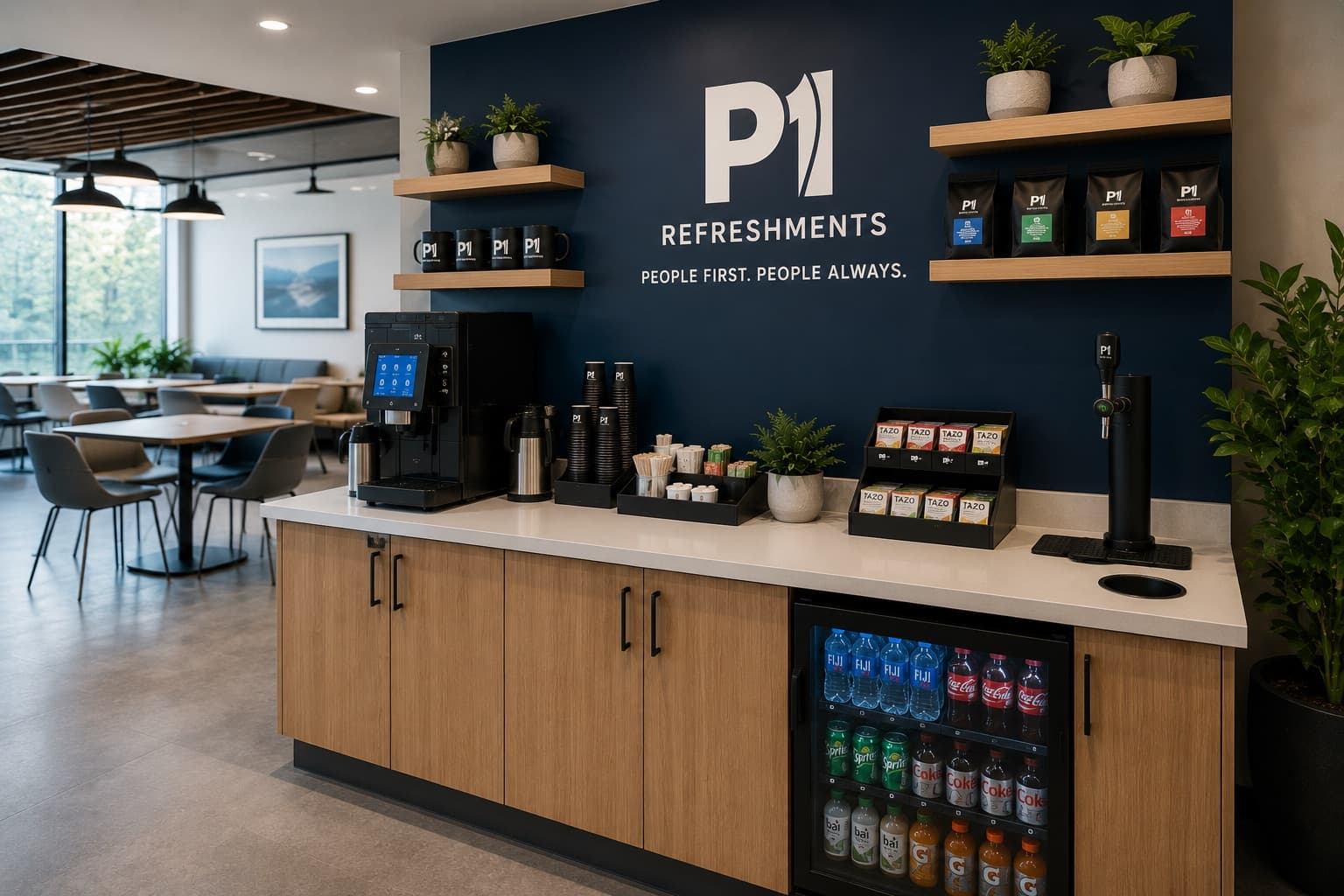
As Hewitt grows, the breakroom becomes your most visible daily culture signal — a room every employee uses that quietly shows whether they were thought about. Good coffee and a few snacks within reach say "you matter here" on repeat, far more cheaply than a one-off perk, and that steady signal helps keep good people from leaving.
Hewitt calls itself "The City Where Business Grows," and the motto on the city seal — "Life Just Right" — is not just civic branding. It is a real description of what is happening here. The population keeps climbing census after census, the commercial development along the I-35 and Hewitt Drive corridor keeps pushing south, and new employers keep arriving to set up shop.
That growth is good news. It also quietly raises the stakes on something a lot of leaders treat as an afterthought: how it actually feels to work for you.
Because when more employers move into the same growing suburb, they are all reaching for the same workers. And in that kind of market, the everyday experience of a job — the parts people feel without being told — starts to matter as much as the offer letter.
Why does the breakroom matter for retention as Hewitt grows?
When Hewitt was quieter, an employer could lean on being one of the few games in town. That is changing.
As the corridor fills in and new teams open their doors, your current and future employees have more options within a short drive than they used to. That does not mean you have to outspend everyone. It means the things that make people want to stay — feeling respected, feeling noticed, feeling like someone thought about them — carry more weight than ever. Those are the things that keep good people from quietly answering a recruiter's message.
The encouraging part is that culture is not built from grand gestures. It is built from small, repeatable moments that add up.
Does a breakroom really help with employee retention?
On its own, no perk keeps anyone — but the daily experience a breakroom shapes absolutely contributes to whether people stay. A room every employee uses, stocked and clearly cared for, is one of the most visible and repeated signals that a workplace pays attention to its people. It will not outweigh pay, but in a tight market where good employees have options nearby, those small, repeated signs of being thought about are part of what makes someone stay rather than answer a recruiter.
The breakroom is your most visible daily signal
Of all the places culture shows up, the breakroom is the most honest one. It is where people go every single day, and what is in it speaks plainly.
A breakroom that was clearly thought about — good coffee that is always ready, a few snacks within reach, a space that feels cared for — sends a message every time someone walks in. A neglected one sends the opposite message just as clearly. Neither requires a speech. People simply notice, day after day, and they draw their own conclusions about how much their workplace pays attention.
You matter here.
That is the message a thoughtful breakroom delivers, quietly and on repeat. It is hard to say it convincingly in a meeting. It is easy to say it with a cup of coffee that is always ready and a space that was set up with people in mind.
Small, repeatable moments beat one-off gestures
A pizza party in July is nice. It is also forgotten by August.
What actually shapes how people feel about a workplace is the steady drumbeat of small things: the coffee that never runs out, the snack that is there on a long afternoon, the sense that the place they spend their days was set up with them in mind. Those moments repeat. They are still working in October, and the following spring, long after a one-time event has faded. That consistency is what culture is really made of, and it is what keeps people from feeling like an afterthought.
A well-run breakroom is one of the few benefits that delivers that drumbeat automatically, every day, without anyone having to organize anything.
Is a stocked breakroom worth it for a small or growing employer?
For a smaller Hewitt employer competing against bigger names, it is one of the highest-leverage culture moves available. It is modest to run, it touches every single employee every day, and it signals care far more cheaply than a raise or a one-off event can. You do not need a corporate budget to make a breakroom feel thought-about — you need it to be reliably stocked and clearly intentional, and that is well within reach for a growing team watching its costs.
Which refreshment setup builds culture for your team?
There is no single right answer, because Hewitt's workplaces are not all the same. The goal is to match the setup to your people.
| Team type | Setup that fits | Culture signal |
|---|---|---|
| Office and professional staff | Office coffee and a pantry | Everyday care, on the house |
| Shift work and larger crews | Vending and a micro-market | Real food at every hour |
| Mixed or growing workplace | A coffee station plus a market | Thought put into all of it |
For a team that mostly wants quality coffee and a few perks, an office coffee program and a company-sponsored pantry signal care every day. For shift-based or larger sites along the Enterprise Boulevard and Sun Valley corridor, vending and micro-markets add round-the-clock convenience that long hours actually need. Many growing Hewitt employers end up with a thoughtful mix. What matters is that the choice reflects how your team really works.
We do not lead with a sales pitch. The conversation starts with listening — your workplace, your employee count, your hours, and the experience you want to create — before we recommend anything. You can read more about our full Greater Hewitt service area, or see how a company-sponsored pantry helps Hewitt employers hire and keep people as the talent race heats up. If your team has outgrown a couple of machines, our look at micro-markets for Hewitt workplaces covers what comes next.
Hewitt is growing, and that is something to be glad about. Let your breakroom grow right along with it — one cup of coffee, one snack, and one moment of feeling valued at a time.
People First. People Always.