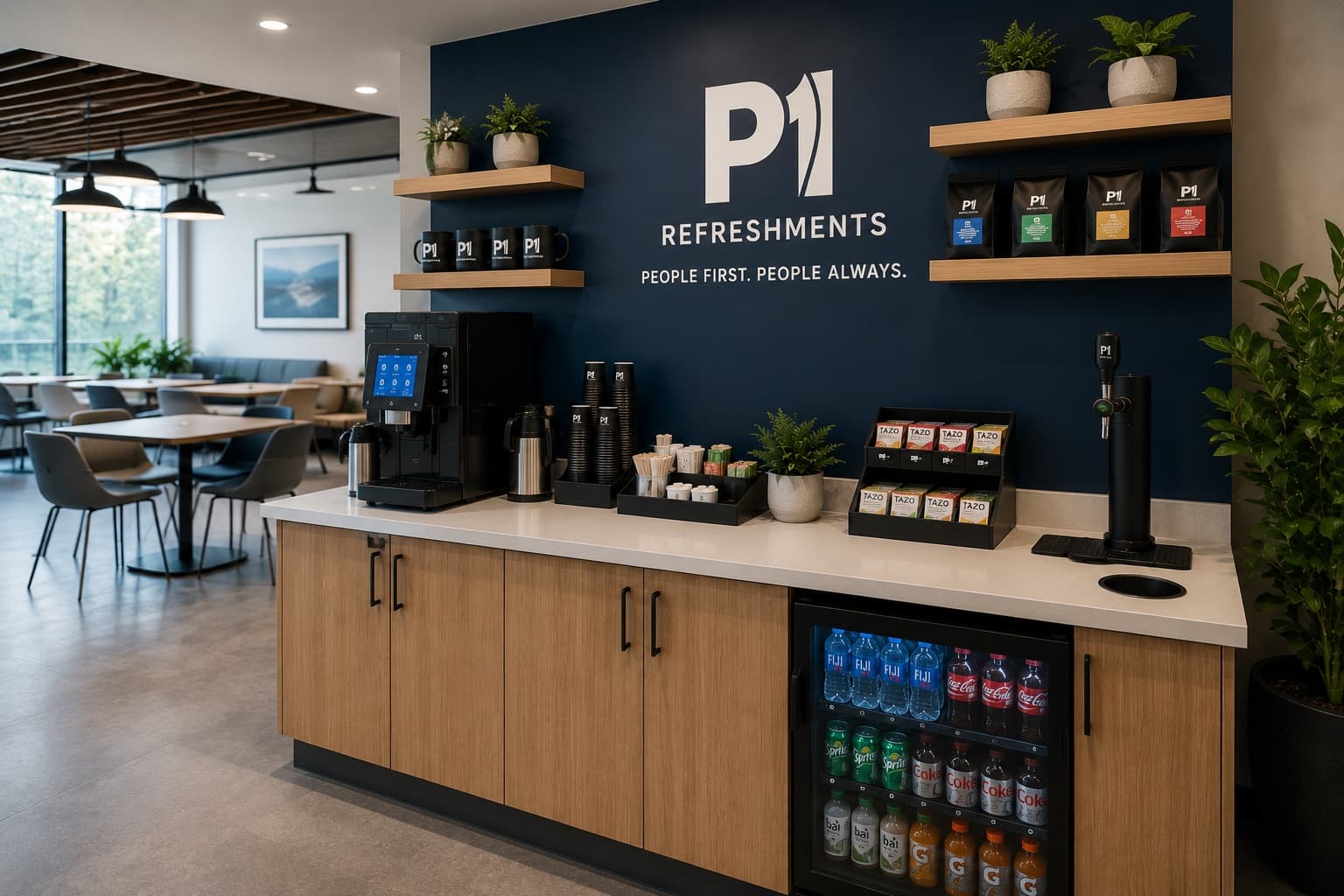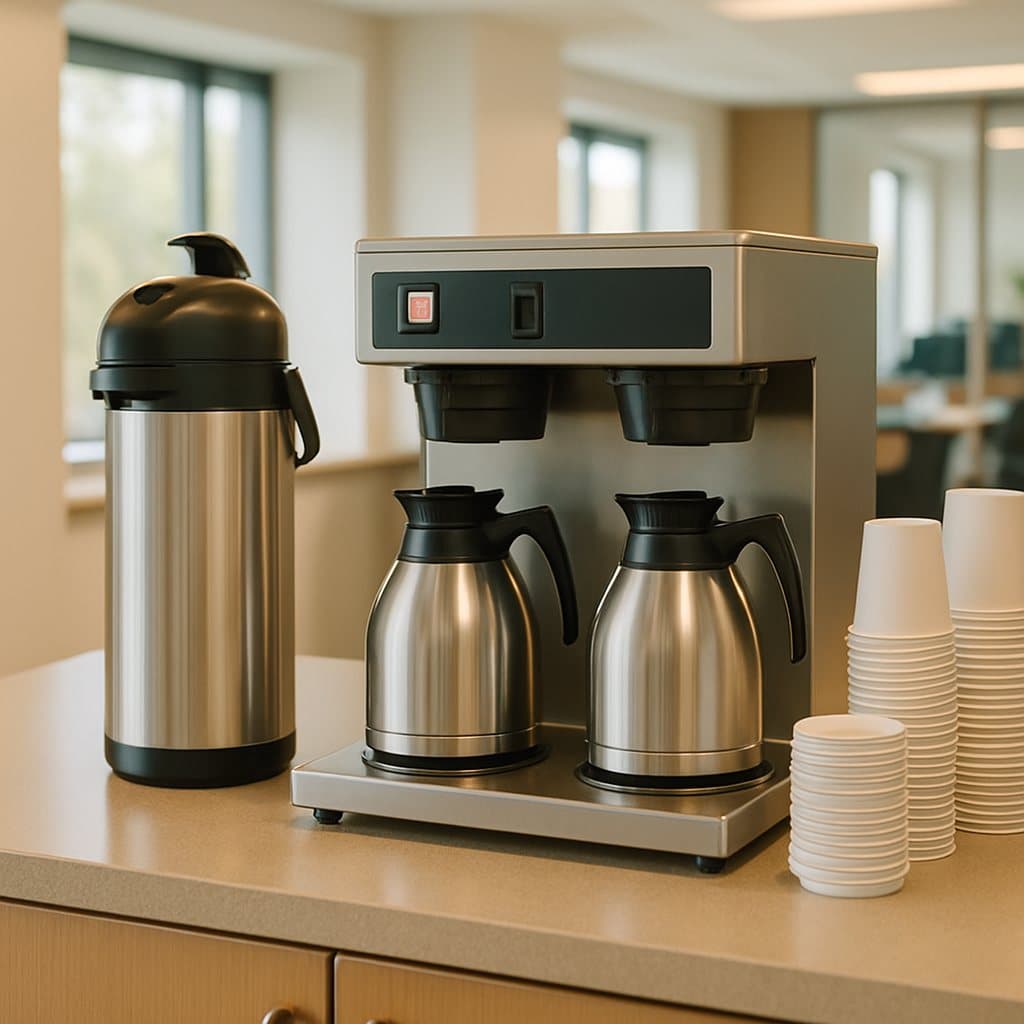
For a Woodway firm, a quiet, low-traffic team (often under 20 to 25 daily drinkers) is usually best served by a dependable single-serve or airpot setup, while a busier, client-facing office is where bean-to-cup variety earns its footprint. Either way, a serviced program keeps the upkeep ours, not yours.
If you manage a small office in Woodway, the coffee question usually arrives quietly: a machine is getting old, a new suite needs a station, or a client meeting reminds you the break-room setup is overdue. And almost immediately, it turns into an equipment debate. Bean-to-cup or single-serve? Café-style or simple and dependable?
At P1 Refreshments, we think the machine is the wrong place to start. The better question is who actually drinks the coffee, and how. Here is how the choice really breaks down for a Woodway office, where the offices tend to be small, professional, and client-facing.
The honest trade-off: simplicity or café-style variety
Strip away the brochures and the decision comes down to one tension: how simple you want the station versus how much variety you want from it.
A single-serve setup is simple by design. One button, a clean cup, almost nothing to think about. A bean-to-cup machine trades some of that simplicity for range — it grinds fresh and builds each drink on demand, so the same counter can pour a plain coffee for one person and something closer to a café drink for the next.
Neither is the "right" answer in the abstract. The right answer is the one that fits the people standing at your counter on a Tuesday morning.
Best fit by team size and traffic
For most Woodway offices, team size and daily traffic decide the category before any feature does.
A small wealth-management or insurance office of a handful of people, with a quiet lobby, is often perfectly served by a dependable single-serve or airpot setup. It is tidy, low-waste, and ready when someone wants a cup. A busier firm — a fuller CPA office, a practice where staff and visitors are at the counter all day — is the kind of place where bean-to-cup variety actually earns its footprint instead of sitting idle.
The pattern we see across Woodway's professional offices is straightforward: lower traffic points to single-serve, steady all-day traffic points to bean-to-cup, and the in-between offices usually land cleanly once they look honestly at how often the machine would really run.
Is bean-to-cup worth it for a small Woodway office?
It can be, if your team or your visiting clients value fresh, varied, cafe-style drinks throughout the day. For a very small or low-traffic office, a quality single-serve or airpot setup is often the smarter and simpler choice for the space, since a bean-to-cup machine only earns its footprint when it is used enough to keep the fresh grind and the espresso options busy. We size that judgment to how your office actually runs, not to the priciest machine on the counter.
What client-facing offices often choose, and why
Woodway is, by the numbers, an office town. Education and healthcare together account for nearly half of working residents here, and the corridors are lined with small, client-facing professional firms — the financial advisors, CPAs, and practices where a visitor is often sitting across the desk within minutes of arriving.
In that setting, the coffee is part of the first impression. "Can I get you a cup of coffee?" is a small line, but in a client-facing office it signals that this is a place that has its details handled. That is why a number of these offices lean toward a fuller setup for the spaces clients see, even when a back-room station stays simple — the visible cup is doing quiet work.
The maintenance reality DIY tends to ignore
Here is the part the equipment debate usually skips: whatever you choose, someone has to keep it running.
A bean-to-cup machine needs regular cleaning and care to keep pouring well. Even a simple single-serve setup needs supplies tracked, a station wiped down, and a plan for the morning it stops working. In a small office, that "someone" is almost always a person who already has a real job to do, and the coffee quietly becomes one more thing on their plate.
A managed office coffee service is the answer to that. We provide and maintain the equipment, keep the supplies stocked, and handle service — so the office gets the upside of a good machine without anyone owning the upkeep. That is the difference between buying a brewer and having a coffee program.
Lined up side by side
Sometimes it is easiest to see the trade-offs in a row. Neither column is "better" — they are different tools for different offices.
| Factor | Single-Serve / Airpot | Bean-to-Cup |
|---|---|---|
| Team size that fits | Smaller, often under ~20–25 daily drinkers | Larger or all-day, often ~25+ daily drinkers |
| Best for | Small or low-traffic offices | Busier, client-facing offices |
| Variety | A reliable, consistent cup | Cafe-style range, ground fresh |
| Counter footprint | Compact and tidy | Larger, a fuller presence |
| Upkeep | Minimal, handled by us | More involved, handled by us |
| Client-facing feel | Clean and simple | An elevated touch for visitors |
Read down the columns and the same pattern holds: a small, quiet office leans single-serve, a busy or client-facing office leans bean-to-cup, and either way the upkeep is ours, not yours.
How we help you choose
We do not walk into a Woodway office with a machine already picked. We start with a conversation — your headcount, your traffic, whether clients use the station, what your team actually drinks — and recommend from there.
If you want to weigh the broader case for a good cup at all, our take on office coffee for Woodway Dr medical and dental offices shows how the same questions play out in a clinical setting. And whichever direction you land, it is the same standard behind our office coffee service for Woodway workplaces: right-sized, well-supplied, and built around your people. If your office sits a few miles south, the same program serves a small business in Hewitt just as easily.
Because in the end, the machine is only the means. The point is a team — and a client across the desk — handed a cup worth looking forward to.
People First. People Always.